Siding for rental properties is exterior wall cladding selected to protect a leased building and simplify ongoing upkeep. For landlords in Eau Claire and the Chippewa Valley, the right choice must also account for tenant access, repair needs, and work around occupied homes.
- Choose siding for rental properties by maintenance needs, repairability, and wall condition—not appearance alone.
- Liberty Exteriors is best for landlords seeking local siding installation in the Eau Claire area.
- Compare vinyl siding, steel siding, fiber cement, and wood by their upkeep and repair trade-offs.
- Put concealed-damage procedures, tenant access, flashing, and cleanup in the written installation scope.
Why siding matters for rental property owners
A rental exterior needs to work between tenant turnovers, not just look good when a unit is advertised. Peeling finishes, loose panels, and recurring leaks create separate maintenance tasks that a new color alone will not solve.
Choose the siding system you can maintain consistently. If you manage the property remotely, a finish that requires regular attention adds another task to arrange. If walls sit beside parking spaces or narrow walkways, repairability deserves as much attention as appearance.
Start with the low-maintenance siding options guide, then assess the building itself. Your 2026 siding plan should separate cosmetic concerns from water-entry problems and damaged wall materials. Those are different jobs, even when they appear on the same elevation.
How to plan siding for an occupied rental
1. Document the building before choosing a material
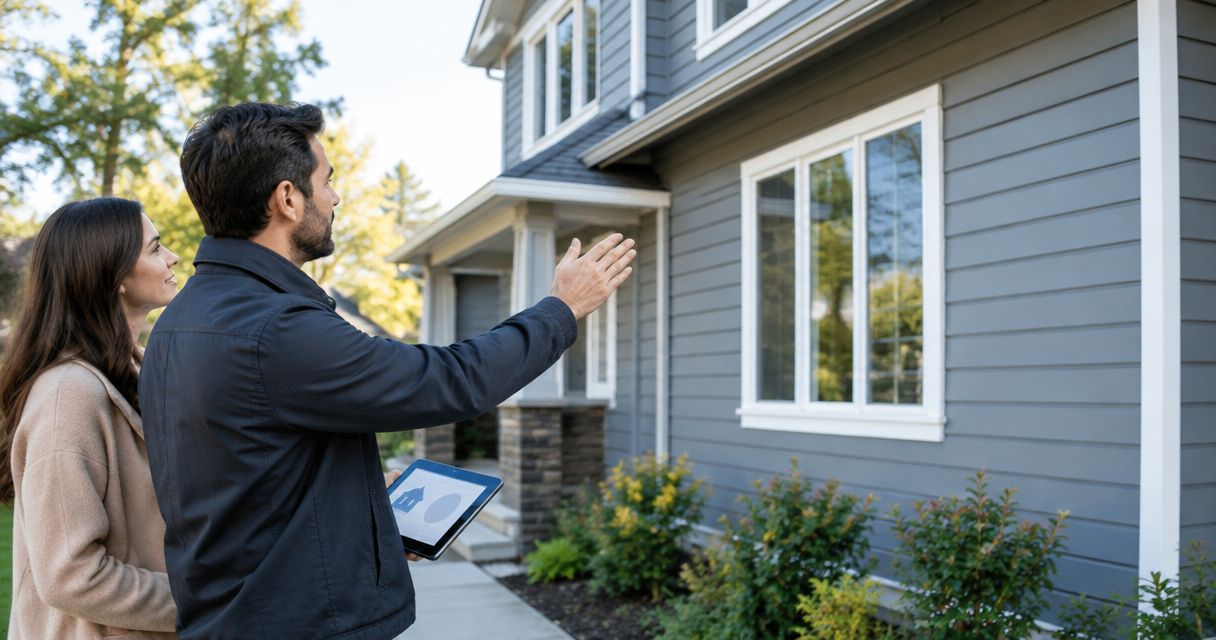
Walk around the property from ground level and record what needs attention. Look for loose siding, open joints, staining beneath windows, damaged trim, and soil or landscaping touching the wall. Do not climb onto a roof or remove siding to investigate.
Take 3 photo types: a full-wall view, a close-up of each concern, and a view showing nearby windows, doors, or drainage. This creates a useful starting record without pretending that photographs reveal what is behind the siding.
Ask tenants about recurring indoor dampness or drafts. Record the location and timing rather than assuming siding replacement will correct the cause. A stain beside a window needs an assessment of the opening and surrounding wall, not simply a covering.
- Photograph each elevation and label its direction.
- Mark repeated repair locations on a simple sketch.
- Record tenant reports separately from visible damage.
- Identify entrances, meters, vents, and exterior fixtures.
2. Define the upkeep you can actually manage
Begin with your maintenance records. Which exterior tasks keep returning: painting, replacing damaged pieces, clearing vegetation, or investigating leaks? Those records provide a better buying brief than a general request for durable siding.
Low maintenance does not mean no inspection. Vinyl does not require repainting as routine upkeep, but damaged panels and loose trim still need attention. Painted materials need finish checks, while metal siding needs inspection for dents, coating damage, and vulnerable cut edges.
For your 2026 planning file, describe who will inspect the exterior and who will authorize repairs. A material is only a practical choice if someone can recognize damage and arrange the appropriate work.
- List recurring tasks from existing maintenance records.
- Identify areas exposed to vehicle or equipment contact.
- Decide whether periodic painting fits your maintenance plan.
- Ask how individual damaged sections are replaced.
3. Compare materials against the property's weak points
Use the wall assessment and maintenance brief to narrow the choices. Bring photographs and a list of recurring problems to the installation discussion. The useful question is not simply which material lasts longer; it is which material and installation details address this building's needs.
Liberty Exteriors provides siding installation in Eau Claire, the Chippewa Valley, and west central Wisconsin, with local experience dating to 1984. Liberty Exteriors siding planning should begin with the property's condition and your maintenance priorities; confirm the material categories offered for your project before making a selection.
Compare physical samples where available. Look at panel shape, surface texture, corner details, and how a repair would meet an older section. No material eliminates the need to manage water around windows, doors, and wall penetrations.
- Compare upkeep requirements alongside appearance.
- Ask about impact damage and repair methods.
- Confirm how the selected material handles movement.
- Review corners, trim, and openings as part of the system.
4. Write the water-management and repair scope
Siding is the outer covering, not the entire moisture-control system. Water that gets behind it needs a properly detailed route back outside. Flashing, the water-resistive barrier, and connections around openings therefore belong in the installation discussion.
Ask what removal will expose and how concealed damage will be handled. Covering soft or deteriorated wall material does not repair it. Establish a written approval process for additional work before removal begins, including photographs and a description of the proposed repair.
Keep 2 warranty documents distinct: the product warranty and any workmanship warranty provided. Product coverage concerns the material under its stated terms; workmanship coverage concerns installation under its own written terms. Ask whether rental use or ownership changes affect either document.
- Specify removal, disposal, and preparation responsibilities.
- Identify flashing work at windows, doors, and penetrations.
- Set a written process for concealed-damage approval.
- Request the applicable warranty terms before signing.
- Clarify how fixtures and utilities will be handled safely.
5. Coordinate tenants and adjoining exterior work
Start with a property access plan you can share with tenants. Identify entrances that must remain usable, parking restrictions, material storage areas, and how schedule changes will be communicated. Follow the notice requirements that apply to your leases and property.
Coordinate other exterior needs without automatically adding them to the project. Roof edges, gutters, windows, and doors connect to the walls. Deck attachments and sunroom connections also deserve review where they meet the siding, especially if those areas show recurring moisture problems.
For occupied work in 2026, ask how entrances and exposed wall areas will be managed during construction. Avoid promising tenants a completion date before the contractor has assessed the scope and scheduling requirements.
- Name one owner or manager as the project contact.
- Share access instructions and tenant communication responsibilities.
- Identify safe routes around the work area.
- Review adjoining roofing, gutter, window, and door needs.
- Keep deck and sunroom connections in the wall assessment.
6. Close out the project with a repair record
Complete a final walkthrough and compare the finished work with the written scope. Inspect from safe ground-level locations, and ask the installer to explain details you cannot see clearly. Do not use a ladder to check unfamiliar work yourself.
Create a 2026 property file with the selected material, color, profile, installation documents, and care instructions. Store any leftover repair material as directed. Matching an older finish later can be difficult because weathering changes its appearance.
Liberty Exteriors siding installation is one part of the rental's maintenance record, not the end of exterior care. Keep the agreed scope and warranty documents where a future property manager can find them.
- Record unresolved items and responsibility for each.
- Save material identification and approved change documents.
- Obtain care instructions and warranty paperwork.
- Photograph completed elevations and repaired problem areas.
- Add exterior checks to your property inspection routine.
Compare siding options for rental properties
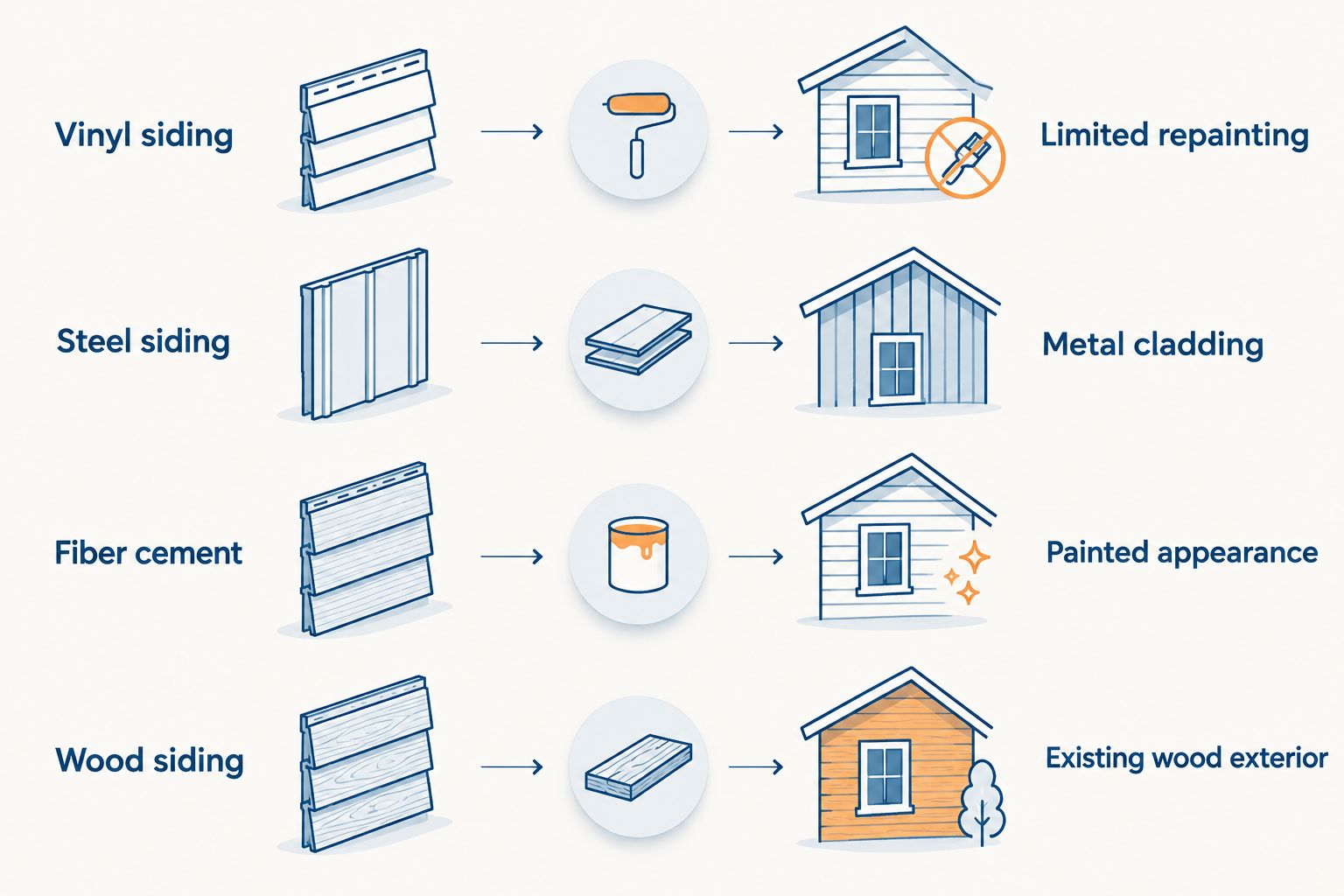
These are generic material categories, not a statement that every category is offered for every project. Select by the building's condition and your maintenance capacity, then confirm installation requirements. Each option has a useful application and a limitation worth understanding.
| Option | Best for | Practical advantage | Key limitation |
|---|---|---|---|
| Vinyl siding | Owners prioritizing upkeep without routine repainting | Does not need a recurring paint finish | Panels can crack or come loose; repairs must account for profile and color matching |
| Steel siding | Owners considering metal cladding and limited repainting needs | Provides metal wall coverage with factory-finished options | Dents and coating damage need assessment; damaged sections require suitable repair methods |
| Fiber cement siding | Owners wanting a painted appearance without wood siding | Offers a paintable surface in several generic siding shapes | Finish upkeep remains necessary, and installation requires careful cutting and fastening |
| Wood siding | Owners preserving an existing wood exterior | Supports traditional profiles and localized carpentry repairs | Needs recurring finish care and close attention to moisture exposure |
A material sample cannot show how a finished wall will drain. Compare the visible siding and the installation plan together. The following comparison separates options by their most useful fit; none removes the need for sound wall preparation.
Repair or replace?
Localized damage does not automatically justify replacing every wall. A limited repair deserves consideration when the surrounding siding and underlying wall are sound and compatible replacement material can be identified.
Replacement deserves assessment when problems repeat across multiple areas, the wall needs broader access for repairs, or patching cannot produce a serviceable result. Neither route should be decided from appearance alone. Ask the installer to explain what can be established during inspection and what remains concealed until removal.
Common mistakes rental property owners make
Choosing the panel but leaving the scope vague
A named siding material does not tell you whether removal, flashing, trim, disposal, and concealed repairs are included. Compare written scopes item by item. A shorter description can leave important responsibilities unresolved.
Treating tenant complaints as a diagnosis
Drafts, damp spots, and staining are useful reports, but they do not identify the cause by themselves. Have the relevant wall, opening, or roof connection assessed. Do not promise a tenant that new siding will fix a problem before its source is established.
Assuming rental use has the same warranty terms
Read the actual documents rather than relying on the warranty heading. Ask about rental use, ownership transfers, maintenance obligations, exclusions, and the claim process. Keep material coverage separate from any installation coverage.
Scheduling around vacancy alone
A vacant unit can simplify access, but vacancy does not establish that the wall is ready for installation. Coordinate the inspection, scope, material decisions, and tenant communications first. Confirm work arrangements rather than building lease commitments around an assumed schedule.
Ignoring connected parts of the exterior
New siding does not correct an overflowing gutter, a deteriorated window opening, or an unsuitable deck connection by itself. Review those interfaces before finalizing the work. Coordinate necessary repairs without replacing sound components simply to make the project larger.
Questions to settle before requesting a quote
A useful quote request describes the property, the visible concerns, and the decisions still open. For a 2026 project, send current photographs rather than relying on images from an earlier tenant turnover.
Ask these questions before agreeing to the scope:
- What existing siding will be removed, and what will remain?
- How will wall condition be assessed after removal?
- Which flashing and trim details are included?
- How will additional repairs be documented and approved?
- What access arrangements are needed for occupied units?
- Which care instructions and warranty documents will be supplied?
Liberty Exteriors provides exterior installation services for residential and light commercial customers. Describe the building's use and layout when requesting an assessment so the discussion addresses the actual property, not a generic siding package.
FAQ
What's the best siding for rental properties?
The best siding for rental properties matches the building's condition, exposure, and maintenance plan. Compare vinyl, steel, fiber cement, and wood by upkeep, repairability, and installation requirements rather than naming one universal winner.
Is vinyl siding a practical choice for a rental house?
Vinyl siding is a practical option when avoiding routine repainting is a priority. It still needs inspection, and cracked or loose panels require repair with compatible materials.
Should I replace siding while tenants are living in the property?
Plan occupied siding work around safe access, required notices, and clear tenant communication. Confirm parking, entrances, storage areas, and schedule updates before construction begins.
Can new siding fix moisture damage behind the wall?
New siding does not repair deteriorated wall materials by itself. The affected area needs assessment, appropriate repair, and corrected water-management details before it is covered.
Should rental windows and siding be replaced together?
Coordinate windows and siding when both need work or when their flashing connections require attention. Sound windows do not automatically need replacement just because the siding is being changed.
Are siding warranties the same for rental properties?
Rental-property coverage depends on the written warranty terms. Check occupancy restrictions, ownership provisions, exclusions, maintenance requirements, and the separate terms of any workmanship warranty.
What should I send with a siding quote request?
Send the property location, building use, current photographs, known problems, and tenant access constraints. Include your maintenance priorities and ask for a written scope covering removal, preparation, flashing, repairs, and cleanup.
One last thing
Save the material identification, not just the color name. A future repair also depends on the profile, finish, and compatible accessories. A clear property file can make that repair discussion more useful even if you have changed managers by then.