Best overall for routine upkeep: vinyl siding. Best for impact resistance: steel siding. Best for a painted-board appearance: fiber cement. Best for wood texture: engineered wood. This 2026 guide compares the best low maintenance siding options for busy Eau Claire and Chippewa Valley homeowners, with practical project-planning advice from Liberty Exteriors.
- Vinyl leads the best low maintenance siding options when avoiding routine repainting is your priority.
- Steel suits homeowners prioritizing impact resistance, but dents and damaged finishes still need attention.
- Fiber cement and engineered wood offer board-style appearances with more finish maintenance than vinyl.
- Liberty Exteriors provides siding installation for Eau Claire and Chippewa Valley homeowners planning exterior improvements.
Why this matters
Low-maintenance siding should reduce work, not hide problems. A surface that needs little attention still depends on sound walls, correctly installed flashing, and a way for water behind the siding to drain.
For your 2026 project, separate appearance from upkeep. Compare these 4 materials by cleaning needs, finish care, damage repairs, and installation requirements—not simply by which sample looks best indoors.
Liberty Exteriors is a local siding installation option for homeowners in Eau Claire and the Chippewa Valley. The company has served the area since 1984; your material choice should still follow your home's condition and the maintenance you want to avoid.
What makes the best low-maintenance siding?
Use these criteria before comparing materials:
- Finish care: Does the siding need periodic painting, or does its color come from the material or a factory-applied finish?
- Cleaning needs: Can routine dirt be removed using the manufacturer's approved method without damaging the surface?
- Damage repair: Can an individual damaged piece be replaced, and will a replacement blend with weathered siding?
- Moisture details: How will the installer handle flashing, drainage, clearances, and existing wall damage?
- Installation fit: Does the material suit the wall assembly, trim details, and conditions around your house?
- Warranty clarity: What does the product warranty cover, and what separate installation coverage is provided?
For a 2026 comparison, request the care instructions for the actual product being quoted. Material categories explain the broad trade-offs; individual products determine the specific cleaning, coating, and clearance requirements.
Low-maintenance siding at a glance
| Material | Best for | Standout feature | Key limitation |
|---|---|---|---|
| Vinyl siding | Avoiding routine repainting | Color runs through the material | Can crack from impact, especially when cold |
| Steel siding | Impact resistance | Rigid metal panels with a coated finish | Can dent; damaged coatings need attention |
| Fiber cement siding | Painted-board appearance | Cement-based boards that do not rot like wood | Painted finishes still require maintenance |
| Engineered wood siding | Wood texture | Wood-based boards with textured surfaces | Cut edges, clearances, and finish care matter |
The table separates the main reasons to choose each material. Vinyl leads for avoiding repainting; the other materials earn consideration when you place more weight on impact resistance, appearance, or wood texture.
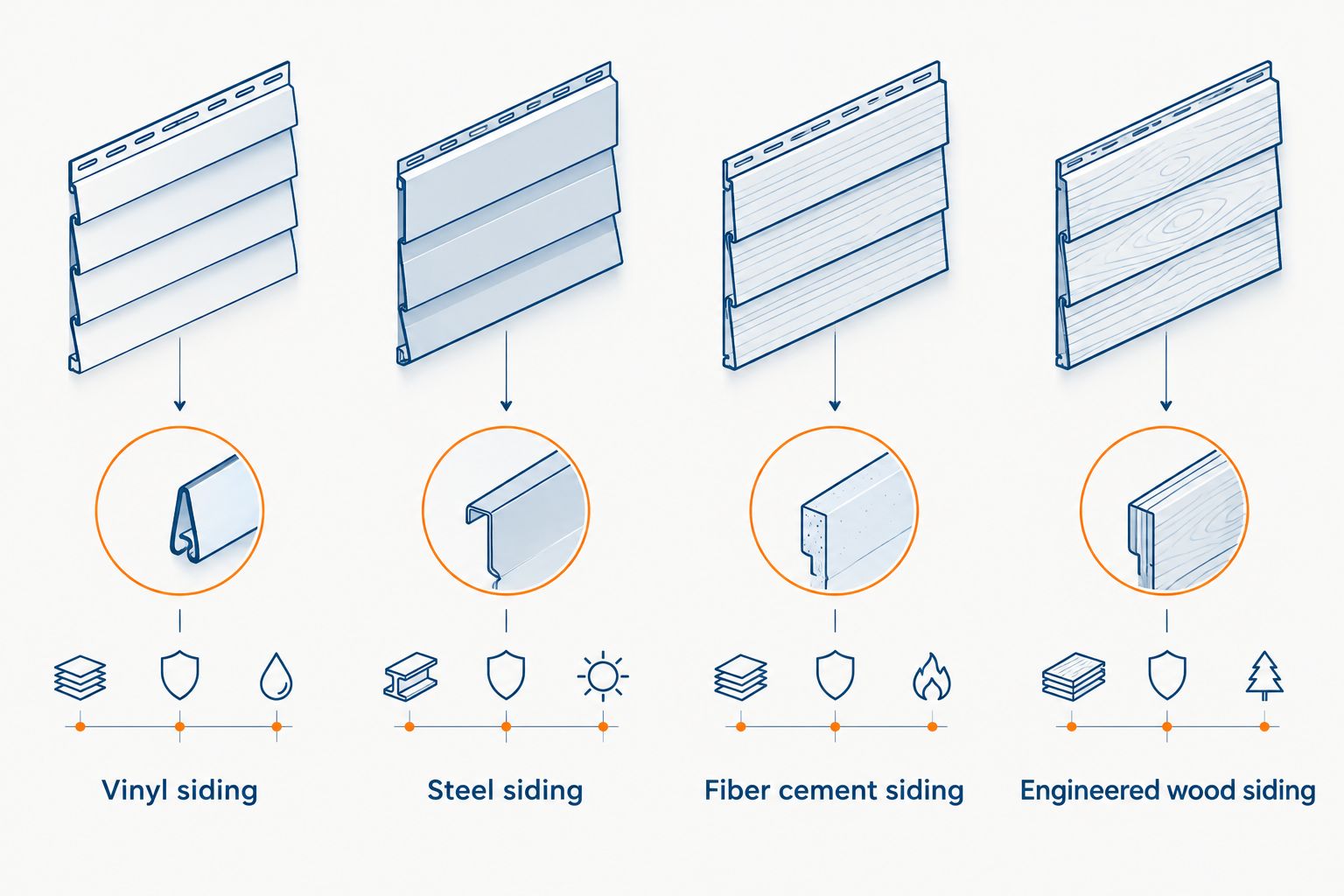
1. Vinyl siding: best for avoiding routine repainting
Vinyl siding is a strong default when your main goal is fewer painting projects. Its color runs through the material, so routine repainting is not part of normal care.
Installation must allow the panels to expand and contract. Your quote should also explain what happens behind them; the vinyl siding installation scope matters as much as the visible finish.
Vinyl siding pros:
- Does not require routine painting to maintain a protective coating.
- Does not rot like wood siding.
- Individual damaged panels can be replaced, subject to access and matching material.
Vinyl siding cons:
- Can crack when struck, particularly in cold conditions.
- Can distort from excessive heat, including a grill placed too close.
- Replacement panels can differ in appearance from weathered sections.
Best for: Homeowners who want ordinary cleaning rather than recurring finish work.
Ask how the installer will handle panel movement, corners, window trim, and wall drainage. A panel fastened too tightly cannot move as intended, so a low-upkeep material still needs careful workmanship.
Verdict: Buy vinyl siding when avoiding repainting is your main priority.
2. Steel siding: best for impact resistance
Steel siding uses coated metal panels to provide a rigid exterior surface. It deserves a close look when resistance to everyday bumps matters more than avoiding every possible dent.
The coating protects the metal, but it is not permission to ignore damage. Scratches, exposed edges, and dents need evaluation according to the product's care instructions.
Steel siding pros:
- Resists routine impacts that can crack more brittle siding.
- Does not rot or provide food for wood-damaging insects.
- Factory-applied finishes reduce the need for routine painting while they remain sound.
Steel siding cons:
- Hard impacts can leave permanent dents.
- Exposed steel can corrode where protective coatings are damaged.
- Panel repairs require attention to fastening, finish matching, and trim details.
Best for: Homeowners who prioritize a rigid exterior and accept occasional damage inspections.
Ask what the manufacturer requires after a scratch and how a damaged panel would be replaced. Do not accept a general statement that metal siding never needs attention; the finish is part of the maintenance plan.
Verdict: Buy steel siding when impact resistance outweighs concern about visible dents.
3. Fiber cement siding: best for a painted-board appearance
Fiber cement combines cement, reinforcing fibers, and other ingredients into siding boards or panels. It provides a board-style exterior without the wood rot concerns of conventional wood siding.
It does not eliminate painting-related maintenance. Whether supplied with a factory finish or painted after installation, the coating needs care according to the finish manufacturer's instructions.
Fiber cement siding pros:
- Provides a painted-board appearance without using solid wood boards.
- Does not rot like wood.
- Offers a surface that can be repainted when you want a color change.
Fiber cement siding cons:
- Finish maintenance remains part of ownership.
- Boards are heavy and require careful handling and fastening.
- Incorrect clearances or water-management details can create problems despite the material's rot resistance.
Best for: Homeowners who value a painted exterior more than eliminating future coating work.
For a 2026 replacement, ask who handles any required field painting and how cut edges are treated. Also ask which gaps require sealant and which must remain open; those details are product-specific.
Verdict: Hold fiber cement as your choice until you accept its finish-care requirements.
4. Engineered wood siding: best for wood texture
Engineered wood siding uses wood-based material formed into boards or panels. Textured faces suit homeowners who want a wood-like appearance rather than a smooth metal or plastic surface.
Protective finishes and installation details matter because this remains a wood-based product. Edge treatment, ground clearance, and roof-to-wall details deserve close attention.
Engineered wood siding pros:
- Provides wood texture in manufactured boards and panels.
- Can be painted to change the exterior color.
- Offers a wood-based alternative to conventional solid wood siding.
Engineered wood siding cons:
- Requires ongoing finish care.
- Moisture exposure at unprotected edges or incorrect clearances can damage the material.
- Maintenance requirements vary by product and finish system.
Best for: Homeowners who want wood texture and will maintain the coating and vulnerable details.
Ask for the exact installation instructions, not a general assurance that the product handles moisture. The quote should identify the finish, required edge treatment, and responsibility for any painting after installation.
Verdict: Buy engineered wood for its appearance; skip it if you want to eliminate coating maintenance.
How these siding options are ranked
This ranking puts routine homeowner effort first: finish care, cleaning, repair practicality, and installation details. It does not rank materials by an unsupported lifespan or assume every product within a category performs identically.
Vinyl takes the default position because it removes routine repainting from normal upkeep. Steel, fiber cement, and engineered wood each fill a different need rather than competing for the same recommendation.
Compare maintenance before you compare quotes
For your 2026 shortlist, ask each contractor to describe the work you will still own after installation. Cleaning, finish repairs, joint inspections, and painting are different tasks; a single low-maintenance label obscures those differences.
The number of stories matters when planning exterior painting work: higher walls complicate access for preparation and coating work. That makes future finish care a practical consideration when comparing vinyl with painted fiber cement or engineered wood.
Ask these 3 questions for every quoted product:
- What needs attention? Request the cleaning, coating, and damage-repair instructions.
- Who can perform it? Separate safe homeowner tasks from work requiring ladders, equipment, or a contractor.
- What must be documented? Keep maintenance instructions, product identification, and warranty paperwork together.
Request 2 warranty documents: the manufacturer's product warranty and the contractor's written workmanship warranty, if offered. A product warranty and installation coverage address different responsibilities; neither should be assumed to cover every leak, dent, or finish issue.
Installation details that keep upkeep manageable
Start with the wall. Replacing the visible siding does not repair concealed rot automatically. Ask how existing siding removal, wall inspection, damaged sheathing, and unexpected repairs will be handled in the written scope.
Plan water drainage. Siding sheds weather, but the assembly also needs correctly detailed water protection behind it. Ask how window and door flashing connects with that layer and where water can exit.
Coordinate nearby work. Roofing, gutters, replacement windows, doors, decks, and sunrooms all create connections with exterior walls. If another project is planned, discuss the sequence before new siding conceals or surrounds those connections.
Keep clearances visible. Landscaping, stored items, and deck connections should not conceal siding edges or violate the selected product's required spacing. Ask the installer to show you the details you will need to inspect later.
Liberty Exteriors provides siding and other exterior installation services. When discussing a siding project, identify any related work early so the written scope addresses those connections without assuming everything needs replacement.
Which low-maintenance siding should you choose?
Choose vinyl if you remain undecided and avoiding routine repainting is your main goal. Choose steel for a rigid exterior, fiber cement for a painted-board appearance, or engineered wood for wood texture—with the maintenance trade-offs stated above.
Before approving a 2026 project, compare written scopes rather than material names alone. Confirm removal, wall repairs, flashing, trim, cleanup, and responsibility for finish work. Those details determine what you are actually buying.
FAQ
What's the best low-maintenance siding for a busy homeowner?
Vinyl siding is the best default when avoiding routine repainting is your main goal. It still needs cleaning, damage checks, and correct installation; low maintenance does not mean no maintenance.
Is steel siding lower maintenance than vinyl siding?
Steel siding is not automatically lower maintenance than vinyl siding. Vinyl avoids routine repainting, while coated steel needs attention when scratches expose the metal; steel also trades greater impact resistance for the possibility of dents.
Does fiber cement siding need painting?
Fiber cement siding has a finish that needs ongoing care, including repainting when the coating requires it. Follow the instructions for the actual product and finish rather than assuming a universal repainting schedule.
Is engineered wood siding maintenance-free?
Engineered wood siding is not maintenance-free. Its protective finish, treated edges, required clearances, and water-management details need attention according to the manufacturer's instructions.
Can new siding fix moisture damage behind the old siding?
New siding alone does not repair concealed moisture damage. The installation scope must address inspection, damaged material, the source of water entry, and the repairs required before the wall is covered.
Should windows and siding be replaced together?
Windows and siding should be planned together when both need replacement, but they do not automatically need replacement at the same time. Coordinate flashing and trim details so the projects do not create conflicting wall connections.
What should I ask Liberty Exteriors before requesting a siding quote?
Ask Liberty Exteriors which siding choices fit your maintenance priorities and what the written installation scope includes. Discuss wall inspection, water protection, trim, related exterior work, and the distinction between product warranties and workmanship coverage.
One last thing
Keep a spare-material plan, not just a color name. Ask how to identify the exact profile and finish if a panel needs replacement later; matching a weathered wall is a repair consideration even when the siding rarely needs other work.