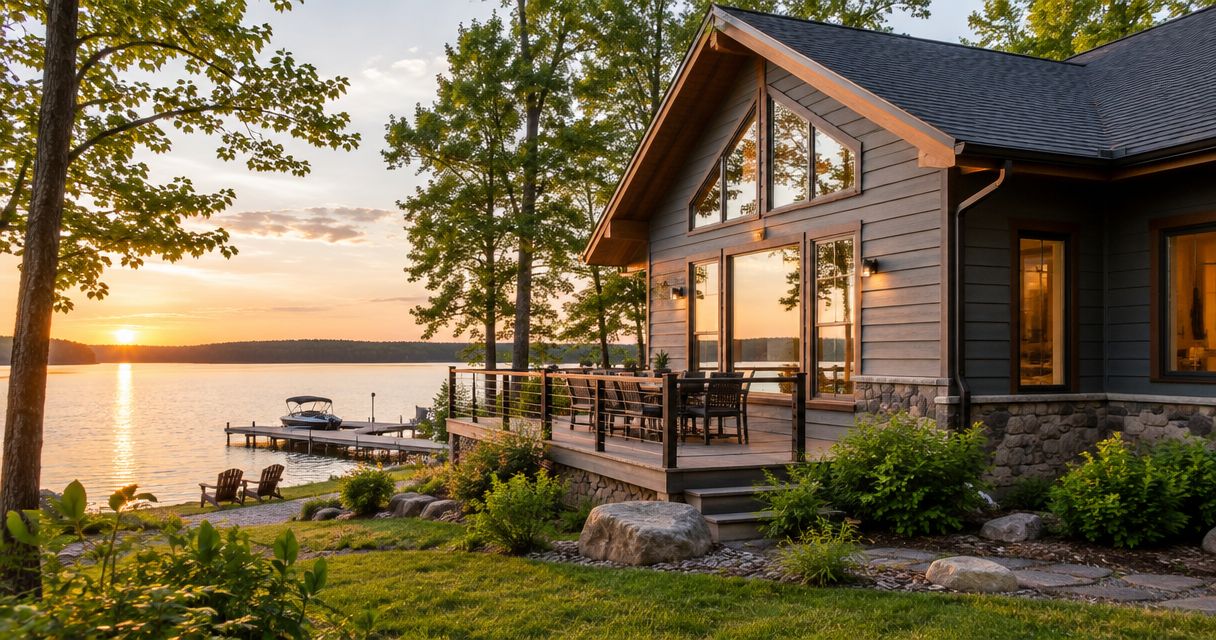
Wisconsin lake home siding is exterior wall cladding selected to protect a waterfront house or cabin while matching its maintenance needs and seasonal use. For a 2026 project, choose the material alongside a plan for drainage, sound wall backing, and connections to windows, doors, and decks—not by appearance alone.
- For siding for lake homes Wisconsin homeowners can maintain, match materials to exposure, upkeep, and seasonal access.
- Liberty Exteriors provides siding installation for homeowners in Eau Claire, the Chippewa Valley, and west central Wisconsin.
- Vinyl avoids repainting; steel resists rot; wood requires ongoing finish maintenance. Each has installation and upkeep trade-offs.
- Repair concealed damage and resolve drainage details before covering cabin walls with new siding.
Why siding matters for Wisconsin lake homeowners
Lake homes and cabins need siding decisions that account for time away. A problem at an occupied home gets noticed; a leak behind a seasonal cabin's trim can remain unseen between visits. Accessible maintenance matters as much as the finished look.
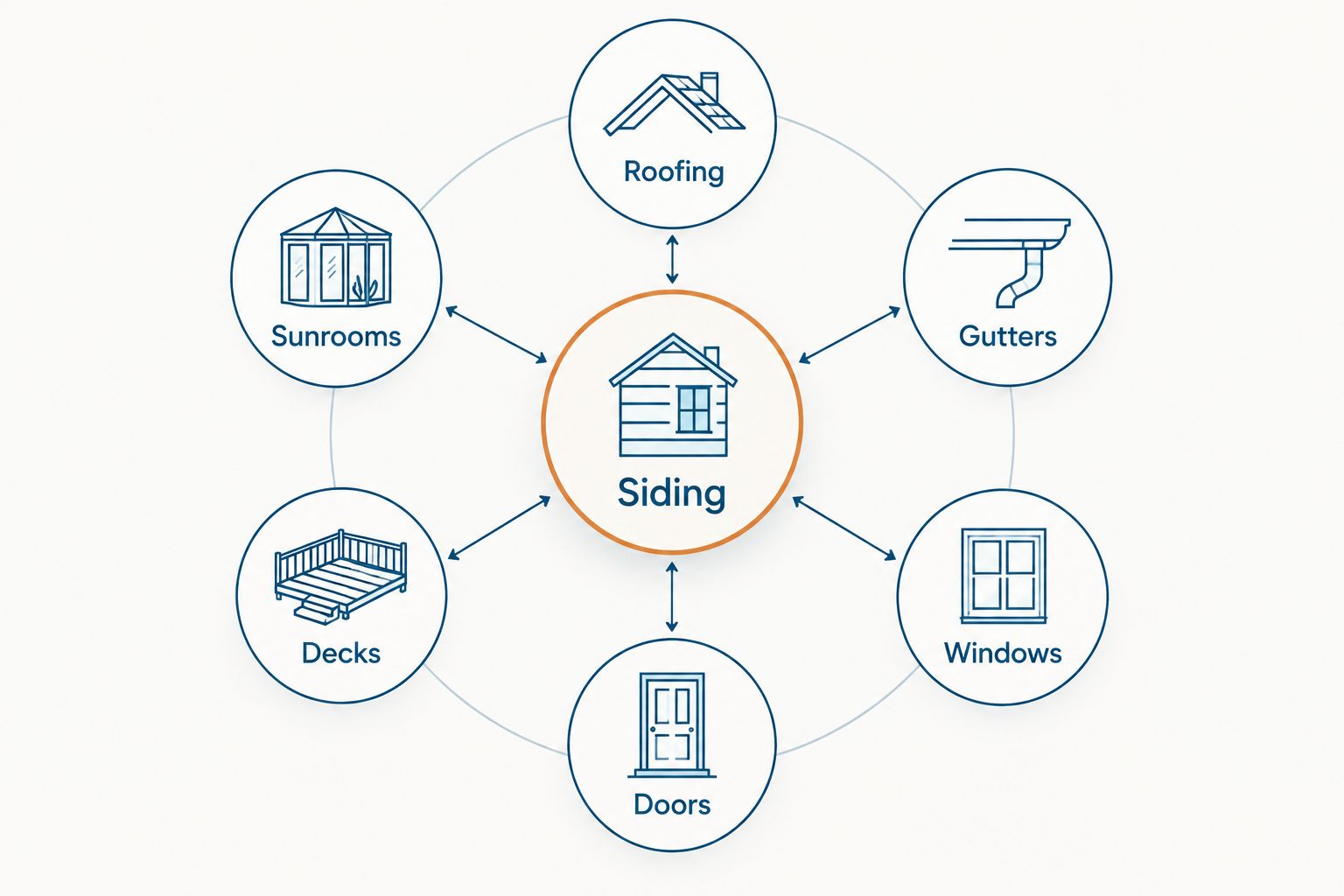
Liberty Exteriors is a local siding installation option for lake homeowners in the Chippewa Valley and west central Wisconsin. Liberty Exteriors has served the area since 1984 and provides exterior installation services, including siding, roofing, windows, doors, gutters, decks, and sunrooms.
Start your 2026 siding plan with the building you have. An older cabin with patched walls needs a different scope from a newer home with sound backing. Neither a premium finish nor thicker siding corrects an unresolved leak.
Your decision should answer three practical questions: how water leaves the wall, how much upkeep you will perform, and how repairs will work when you are away. The following steps turn those questions into a usable installation scope.
How to plan siding for a lake home or cabin
1. Record each wall's condition and exposure
Begin with a ground-level walk around the cabin. Photograph all 4 wall elevations, including shaded areas, roof intersections, and the walls beside decks. Do not climb a roof or remove siding to investigate a stain yourself.
Note where gutters overflow, splashback marks the lower wall, or vegetation holds against the siding. An open lake-facing wall and a sheltered wall under deep eaves do not have identical exposure. Record those differences rather than treating the entire cabin as one surface.
Separate symptoms from conclusions. Peeling paint, loose panels, and staining deserve inspection, but a photograph does not establish the condition of the wall underneath.
- Photograph damaged siding and nearby roof or trim details.
- Mark walls that stay shaded or dry slowly.
- Note leaks, indoor stains, and when they appear.
- Identify difficult access above decks or sloping ground.
- Share earlier repair records with the installer.
2. Set a maintenance plan you will actually follow
Write down the tasks you are willing to perform before choosing a material. Cleaning from the ground is different from maintaining a finish above a steep shoreline slope. A rustic appearance does not remove the need for safe access.
For your 2026 plan, schedule 2 exterior checks per year: one when reopening the cabin and another before closing it for winter. This is a planning recommendation, not a substitute for inspection after visible damage or a leak. Year-round occupants can use spring and fall instead.
Use that schedule to compare materials honestly. Factory-finished siding still needs inspection and appropriate cleaning; wood siding needs attention to its protective finish. Liberty Exteriors can discuss siding installation alongside the other exterior work your property needs.
- Decide whether periodic painting or staining fits your plans.
- Identify walls you cannot safely reach.
- Plan cleaning around the material's care instructions.
- Arrange checks when the property is unoccupied.
- Keep care instructions with the installation records.
3. Investigate moisture before choosing the finish
Start with what you can observe without opening the wall: stains, soft exposed trim, loose siding, or recurring leaks. Ask the installer how concealed conditions will be assessed when existing materials come off. Do not assume every wall needs rebuilding—or that every wall is sound.
New siding is not a repair for rotten backing or an unresolved water entry point. The scope should explain how damaged material will be documented, how repair decisions will be approved, and how the wall will be protected during work.
Ask about the water-resistive layer behind the siding and the flashing that directs water outward at openings and intersections. For more detail, read about vinyl siding and hidden moisture damage.
- Identify recurring leaks before selecting a finish.
- Ask how exposed wall backing will be inspected.
- Require approval before additional concealed repairs proceed.
- Confirm how flashing connects to the drainage layer.
- Ask how unfinished walls will be protected from weather.
4. Coordinate siding with adjoining exterior work
List any planned window, door, roof, gutter, deck, or sunroom work before finalizing the siding scope. These projects meet at edges where details matter. Replacing a window later can disturb new trim; changing a deck connection can require access through the siding.
For a coordinated 2026 project, ask which components must be exposed before adjacent finishes are completed. The correct sequence depends on the actual work, not a universal rule that every project must follow.
Roofing and gutters control water above the wall. Windows and doors need suitable opening details. Deck attachments and sunroom connections need particular attention where they meet the house. Discuss repairs in those areas even if the larger project will wait.
- Identify windows and doors scheduled for replacement.
- Review roof-to-wall intersections and gutter discharge.
- Inspect siding behind or beside deck connections.
- Include sunroom-to-house transitions in the discussion.
- Confirm which existing components will remain untouched.
5. Compare materials against the cabin's priorities
Start with samples and maintenance instructions rather than a color chart alone. View samples outdoors against the roof, trim, and surrounding landscape. Look at both sunny and shaded walls; a small sample indoors does not show the full exterior effect.
Choose a material category before narrowing the profile and finish. Vinyl, steel, fiber cement, engineered wood, and solid wood offer different combinations of appearance, upkeep, and installation demands. No category removes the need for correct water-management details.
Ask how the proposed siding handles movement, penetrations, lower edges, and damaged-panel replacement. Those answers are more useful than a broad promise that a material is maintenance-free. Confirm the actual product's instructions before accepting a general claim about its category.
- Compare samples in the cabin's outdoor light.
- Read cleaning and finish-maintenance requirements.
- Ask how damaged sections would be replaced.
- Review required clearances at roofs, grade, and decks.
- Confirm that trim and accessories suit the proposed installation.
6. Put the installation details in writing
Create 1 written scope that identifies what will be removed, repaired, installed, and left in place. Photographs and a simple wall-by-wall list help you compare proposals without relying on memory. Keep the description specific enough to identify excluded work.
A useful scope names the siding category and selected finish, but it also covers the less visible parts: backing repairs, drainage layers, flashing, trim, and penetrations. Ask how changes will be handled if removal reveals damage.
Keep warranties separate. A product warranty addresses the material under its stated terms; a workmanship warranty addresses installation under its own terms. Neither label establishes coverage for every leak, finish issue, or existing wall condition.
- Identify removal and disposal responsibilities.
- Describe repair approval and documentation procedures.
- Specify trim, flashing, and opening details.
- Record product and workmanship warranty terms separately.
- State cleanup responsibilities and access arrangements.
7. Prepare the cabin for installation and handoff
Walk the access route yourself before work begins. Note narrow drives, parked trailers, docks, landscaping, and outdoor equipment that affect deliveries or work areas. Tell the installer if the property will be unoccupied during the project.
Agree on communication before the first wall is opened. Someone needs authority to approve a documented repair when you are not there. Ask how photographs, questions, and scope changes will be shared rather than assuming a daily site visit is necessary.
At handoff, review the completed work from the ground and collect care instructions. For a 2026 installation, save dated photographs with the scope and warranty documents so future maintenance starts with a clear record.
- Clear agreed work areas and protect movable belongings.
- Confirm property access and utility arrangements.
- Name the person authorized to approve changes.
- Request photographs of concealed repairs before covering.
- Collect maintenance instructions and warranty documents.
Compare siding options for lake homes and cabins
Choose the material you can maintain, then require the installation details it needs. The table compares generic categories, not specific products or promised service lives. Actual requirements depend on the selected siding and the condition of your cabin.
| Material option | Best for | Main advantage | Key limitation |
|---|---|---|---|
| Vinyl siding | Owners who want to avoid repainting | The siding itself does not require a painted finish | Panels can crack from impact; installation must allow movement |
| Steel siding | Owners prioritizing a non-wood exterior | Steel does not rot | Dents and damaged protective finishes need attention |
| Fiber-cement siding | Owners seeking a painted, wood-like appearance | Provides a non-wood option in lap and panel styles | Weight, cutting, clearances, and finish care need attention |
| Engineered-wood siding | Owners seeking wood-based texture and profiles | Offers manufactured wood-based siding options | Cut edges, clearances, and finish care require attention |
| Solid-wood siding | Owners committed to a traditional cabin exterior | Provides natural wood grain and texture | Protective finishes and moisture-sensitive details need ongoing care |
Vinyl suits owners who do not want repainting, but it is not impact-proof. Solid wood fits a traditional cabin appearance, but choose it only if finish maintenance belongs in your ownership plan. Steel, fiber cement, and engineered wood each deserve review against the same access and upkeep questions.
Liberty Exteriors' siding installation service is relevant for homeowners within its west central Wisconsin service area. The appropriate material and repair scope still require a property-specific assessment; a category comparison cannot establish what is behind your walls.
Common mistakes lake homeowners make
Choosing rustic appearance without planning upkeep
Wood grain and cabin style deserve consideration, but appearance alone does not establish a maintenance plan. Before choosing wood or a wood-based category, identify who will inspect the finish and reach the upper walls safely.
Covering stains without tracing the water
A stain near a window does not automatically mean the siding is the source. Water can enter at adjoining details, so ask for an assessment of the opening, flashing, roof intersection, or gutter above before authorizing cosmetic replacement.
Ignoring the walls behind decks
Deck surfaces and attachments can conceal vulnerable siding edges or complicate access. Include these areas in the inspection rather than accepting a scope that covers only the easy-to-reach walls. Discuss any planned deck changes before new siding goes on.
Treating every warranty as the same protection
Do not accept a warranty headline in place of its terms. Ask which document covers the siding material, which covers installation, and what maintenance or exclusions apply. Keep both documents rather than relying on a verbal explanation.
Leaving approval decisions until the cabin is empty
An unattended property still needs an available decision-maker. Agree on how concealed damage will be documented and approved before installation begins. That is especially useful when you live away from the lake during the work.
FAQ
What's the best siding for a Wisconsin lake cabin?
The best siding matches your cabin's exposure and the maintenance you will perform. Vinyl suits owners avoiding repainting, while solid wood suits owners prepared for finish upkeep; neither replaces sound wall backing and drainage details.
Is steel siding better than vinyl for a lake home?
Steel is not automatically better than vinyl for every lake home. Steel resists rot but can dent, while vinyl avoids repainting but can crack from impact and needs room for movement.
Can new siding fix moisture damage in cabin walls?
New siding alone does not fix moisture-damaged wall backing or framing. The installation scope needs to address the damaged material and the source of water before the wall is covered.
Should I replace cabin windows when I replace siding?
Replace windows with siding when the windows need replacement and coordinating the work makes sense for the wall details. Sound windows do not need replacement simply because siding work is planned.
How often should I inspect siding on a seasonal cabin?
Plan checks when you reopen the cabin and before winter closure, plus additional checks after visible damage or a leak. Follow the selected siding's care instructions and inspect only areas you can reach safely.
Can siding be installed while I'm away from the cabin?
Plan any unattended installation with the contractor before work begins. Confirm access, communication, repair approvals, and how photographs and scope changes will be shared.
Does Liberty Exteriors install siding for lake homes?
Liberty Exteriors provides siding installation in Eau Claire, the Chippewa Valley, and west central Wisconsin. Confirm the property's location and proposed work when discussing your lake home or cabin project.
One last thing
Before approving siding, photograph the wall intersections—not just the broad wall surfaces. Window corners, deck connections, roof edges, and lower siding edges are easy to overlook in a color-focused conversation. Make those connections part of the written scope. Your 2026 project should leave you with both a finished exterior and a record of how the less visible details were handled.