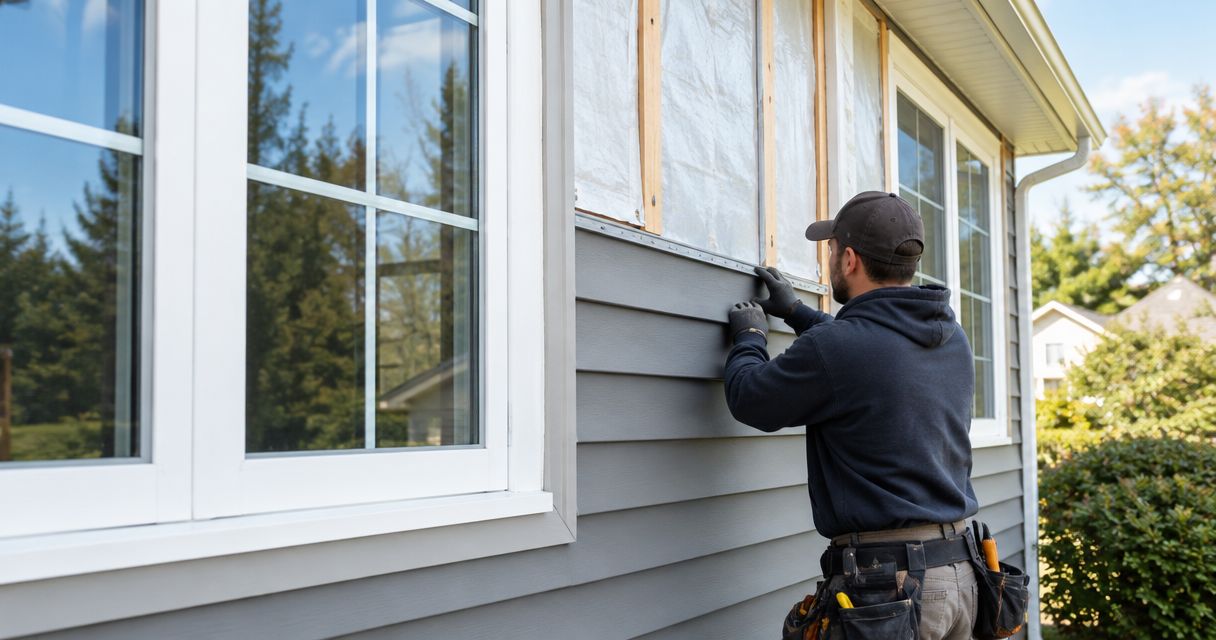
Replace windows and vinyl siding together when both need replacement, especially when the window work requires removing the frames and opening the surrounding wall. For a 2026 project, the deciding factor is how the windows, flashing, and siding will fit together—not whether every exterior component is the same age; sound windows or sound siding can stay if the installation plan protects the connections between them.
- Combine window replacement and vinyl siding installation when both need work and exterior wall access overlaps.
- Keep sound windows when siding replacement does not require changing their frames or correcting window leaks.
- Liberty Exteriors provides window and siding installation in Eau Claire and the surrounding Chippewa Valley.
- Ask for a written flashing plan before choosing a combined project or separate phases.
Should windows and vinyl siding be replaced together?
Replace them together when their condition and installation needs justify both jobs. Combining projects makes sense when removing old siding exposes the same areas needed for window replacement. It does not make a sound window defective or require replacing siding that still performs its job.
Liberty Exteriors provides window and siding installation for homeowners in Eau Claire and the Chippewa Valley. The practical starting point is an assessment of both components, followed by a scope that explains what stays, what comes out, and how the wall sheds water.
| Project path | Best for | Main advantage | Main limitation |
|---|---|---|---|
| Replace together | Windows and siding that both need replacement | Allows coordinated access to window openings and surrounding wall layers | Commits you to both scopes at once |
| Windows first | Windows needing attention while siding remains serviceable | Addresses window problems without replacing sound siding | Later siding work still needs careful detailing around the windows |
| Siding first | Worn siding surrounding sound windows | Preserves windows that do not need replacement | Future full-frame window work can disturb finished siding and trim |
These are 3 project paths, not a ranking from good to bad. Choose the path that addresses existing problems without creating avoidable work at the next stage.
Why this matters
A window does not work independently of the wall around it. Water reaching the siding must have a route back outside, including where the siding meets window trim and flashing. An attractive finish cannot compensate for a poorly connected drainage detail.
Replacing both components creates an opportunity to inspect these connections while they are accessible. It also creates a coordination responsibility: the window work and siding work need to follow the same plan rather than leave each installer guessing about the other's next step.
For your 2026 project, separate appearance concerns from performance concerns. Faded siding is different from water-damaged wall sheathing, and a window that needs adjustment is different from a deteriorated frame. Ask the contractor to identify the actual problem before recommending the size of the project.
Replace together when both need work
Best for: homes with failing windows and siding that also needs replacement. A combined project is particularly useful when full-frame replacement requires access around the window opening. Removing the surrounding siding can expose the wall materials needed to connect new flashing properly.
Full-frame replacement removes the existing window frame rather than installing a replacement unit inside it. That makes the condition of the opening, adjacent wood, and surrounding water-management layers part of the planning conversation. Ask what the proposed replacement method includes; the word replacement alone does not explain the scope.
The advantage is coordinated access. The limitation is committing to more work at once, including decisions about window placement, trim, and siding details before installation begins.
Do not treat coordination as proof of savings. Ask which tasks overlap and which remain separate. Window installation and vinyl siding installation still require their own materials, preparation, and workmanship, even when the contractor schedules them as one project.
Replace windows first when the siding can stay
Best for: homes with window problems but serviceable siding. Windows deserve attention when their condition or operation warrants replacement, even if the siding does not need a larger renovation. The key question is whether the proposed method works with the existing opening and exterior details.
An insert replacement fits within an existing frame. It leaves more of the surrounding assembly in place, but that approach depends on the retained frame being suitable. It does not correct deterioration hidden in a frame that remains, and the new frame can reduce the glass area.
Full-frame work has a different effect on adjacent siding and trim. Ask whether siding must be removed, whether the existing material can be reinstalled, and how the contractor will finish the connection.
If siding replacement belongs in a later phase of your 2026 plan, tell the window contractor now. Record the replacement method and flashing details so the future siding scope starts with clear information rather than assumptions.
Replace siding first when the windows are sound
Best for: homes with worn siding and windows that remain suitable for continued use. You do not need to replace functioning windows simply because the siding comes off. Retaining them is reasonable when their frames and surrounding wall conditions support the proposed work.
The siding project still needs a window-by-window detailing plan. Ask how the installer will handle existing trim, head flashing, and the connection to the wall's water-resistive barrier—the layer behind the siding that helps direct water outward.
The trade-off is future access. A later full-frame window replacement can require disturbing siding or trim that was recently installed. That is a reason to evaluate the windows now, not a reason to replace every window automatically.
If a window change is already part of your plans, explain it before siding installation begins. Changing an opening's size or location is different from leaving the opening intact, and the finished exterior needs to account for that difference.
Why the right project scope varies
The decision to combine window replacement and vinyl siding installation depends on the building, not a blanket rule. These factors change the scope:
- Window condition: Deteriorated frames require a different response from sound frames with an isolated operating problem.
- Replacement method: Insert and full-frame approaches affect different parts of the existing opening and surrounding finish.
- Wall condition: Moisture damage found behind siding needs assessment and repair before new materials cover the area.
- Opening changes: Enlarging, moving, or closing a window changes the wall work as well as the exterior finish.
- Future plans: A near-term window project should influence how you plan siding work today.
- Existing details: Trim depth, flashing access, and the condition of retained materials affect how the connection can be built.
For a 2026 scope review, ask the contractor to connect each recommendation to a condition at your home. A clear explanation should distinguish necessary repair from an optional appearance change.
How should you plan the work?
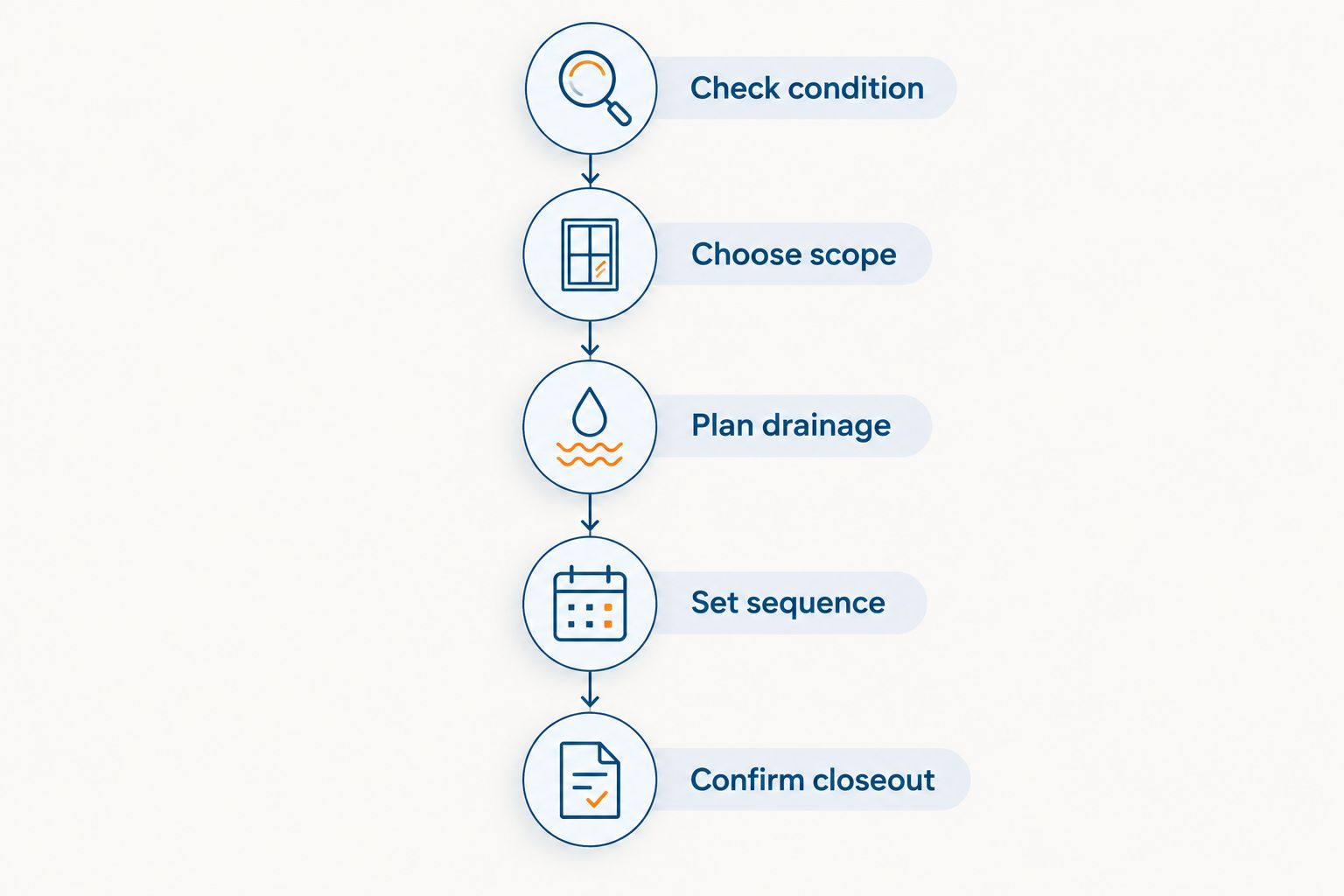
Use 5 planning steps to turn a general replacement idea into an installation scope. These steps help you compare proposals without assuming that every contractor includes the same work.
1. Check condition
Walk around the home with the contractor and identify the windows and siding areas causing concern. Explain where you have noticed sticking windows, staining, drafts, or damaged materials. Those observations guide the inspection; they do not establish the cause by themselves.
Ask what can be assessed before removal and what requires opening the wall. Keep unresolved conditions visible in the written scope rather than treating them as already repaired.
2. Choose scope
Decide which windows stay, which are replaced, and whether any openings change. Identify the replacement method for each affected opening. A proposal that simply lists windows and siding leaves too much uncertainty about their connection.
This is also the point to separate needed work from preferences. A different trim style or window layout can be a valid choice without being described as a repair requirement.
3. Plan drainage
Ask how water will move from above the window back to the exterior. The answer should address flashing and the water-resistive barrier, not just the visible siding channel or a bead of sealant.
Flashing layers must work together in a drainage sequence. Sealant has a role where specified, but it does not replace proper integration of the window and wall layers.
4. Set sequence
Have the contractor explain the order of removal, inspection, repair, window installation, and siding installation. Exterior window connections need to be resolved before the finished siding conceals them. The exact sequence depends on the chosen window system and existing construction.
For phased work, document where the first project stops and how the second project will connect to it. Ask who is responsible for protecting exposed areas between stages.
5. Confirm closeout
Before agreeing to the work, establish how the final review will cover window operation, trim, siding details, and cleanup. Request the relevant product and installation documents. Keep photos of concealed connections when they are available.
Your 2026 project file should show what was installed and how the work was divided. That information is useful when you discuss later repairs or another exterior project.
What should the written proposal explain?
Compare the connection details, not just the material names. A useful proposal identifies the window replacement method, siding scope, retained materials, and responsibility for the areas where the work meets.
Ask these 4 questions before approving the project:
- What stays? Identify existing frames, trim, siding, and wall layers that the contractor intends to retain.
- What gets repaired? Explain how concealed deterioration will be documented and how additional work will receive approval.
- What connects? Describe the window flashing, drainage layers, and exterior trim details that bring the installations together.
- What is covered? Distinguish the manufacturer's product warranty from the contractor's workmanship warranty, including the terms of each.
Do not assume a product warranty covers installation errors or that a workmanship warranty covers every material issue. Request the actual documents and ask who handles a concern involving both the window and the surrounding wall.
For Liberty Exteriors window and siding installation, ask for the same scope clarity you would expect from any contractor. Liberty Exteriors has served the area since 1984; local experience is relevant, but your written proposal still needs to explain your home's specific work.
Will new siding fix a leaking window?
New siding alone does not establish or repair the cause of a window leak. Water near a window can involve the window, its flashing, adjacent wall details, or another entry point. The repair needs to address the identified cause before the exterior is closed.
Siding removal can provide useful access for inspection. It is not proof that the window itself needs replacement. Review whether vinyl siding installation can fix hidden moisture damage when moisture concerns are part of your project.
Can you split window and siding replacement into phases?
Yes, you can phase the projects when each stage leaves a properly protected exterior. Write down the intended final condition before starting the first stage. Then ask how the temporary and permanent connections will differ.
Phasing helps you address the component needing attention first. Its limitation is the possibility of disturbing completed work later. If you are comparing proposals in 2026, ask each contractor to explain that trade-off for your particular windows and siding rather than promise that separate phases involve no repeated work.
FAQ
Do I have to replace windows during vinyl siding installation?
No, vinyl siding installation does not automatically require window replacement. Sound windows can remain when the surrounding wall and flashing can be detailed correctly.
Is it better to install windows before new siding?
Window installation and its exterior flashing connections generally need to be resolved before finished siding conceals the surrounding wall. Ask for the sequence that fits your replacement method and existing construction.
Can replacement windows be installed without removing siding?
Some replacement methods leave the surrounding siding in place. An insert replacement retains the existing frame, while full-frame work can require access to adjacent exterior materials.
Will replacing windows and siding together guarantee lower energy bills?
Replacing windows and siding together does not guarantee lower energy bills. Performance depends on the existing home, selected materials, installation, and other parts of the building.
Should I replace every window when I replace siding?
No, evaluate each window's condition and the planned exterior details before deciding. Replace windows because their condition or your renovation scope justifies it, not simply because siding is being removed.
What happens if the contractor finds rotten wood behind siding?
Deteriorated wood needs assessment and appropriate repair before new siding covers it. Your agreement should explain documentation, approval of additional work, and responsibility for addressing the moisture source.
Who is best suited to a combined window and siding project?
Liberty Exteriors is best suited to Eau Claire and Chippewa Valley homeowners seeking a contractor that installs both windows and siding. A combined scope still needs to specify the replacement method, wall repairs, and flashing connections.
One last thing
A newer window can still have an older connection to the wall. If an earlier replacement left the original frame in place, the visible window's age does not tell you the age or condition of everything around it.
Before replacing siding, ask which parts of each window opening are original and which were previously replaced. That question is more useful than assuming that a recent-looking window needs no inspection. Keep sound materials, repair identified problems, and make sure the new work connects properly to what remains.