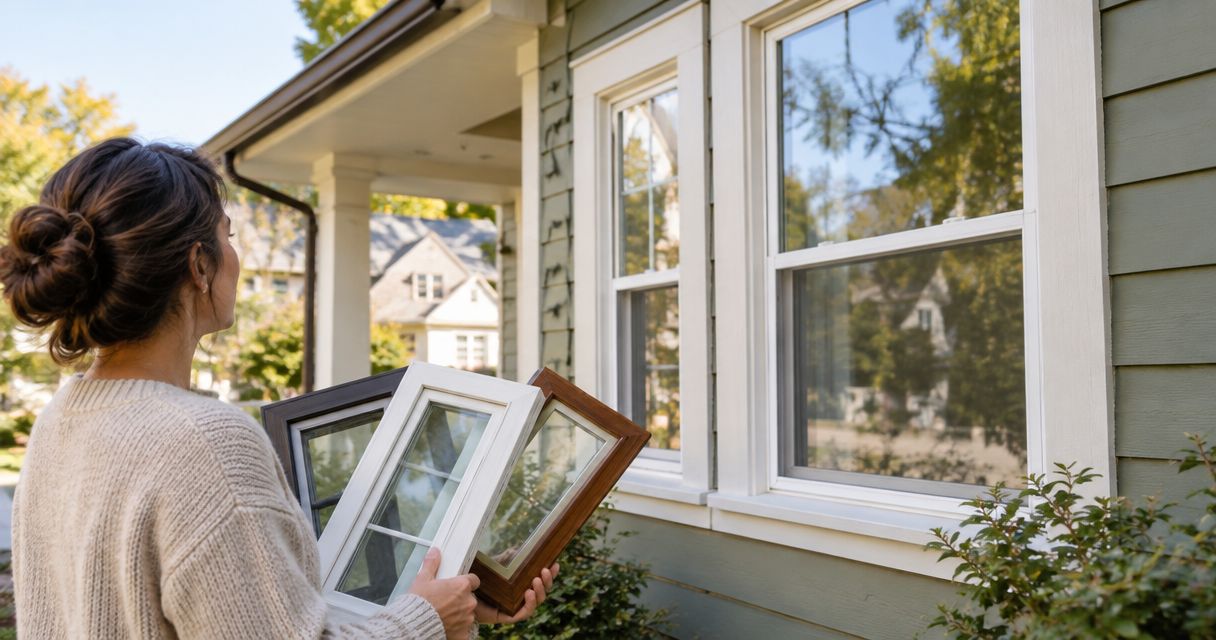
Best overall: double-hung windows. Best for hard-to-reach openings: casement windows. Best for an unobstructed view: picture windows. The best replacement windows for older homes preserve the house’s proportions while solving a specific problem; this 2026 guide compares six styles for Eau Claire homeowners.
- Double-hung windows are the best replacement windows for older homes with traditional, vertically proportioned openings.
- Casement windows suit hard-to-reach openings; picture windows suit views where ventilation is not needed.
- Liberty Exteriors provides replacement window installation in Eau Claire and the surrounding Chippewa Valley.
- Choose the installation method after checking the existing frame, not just the window style.
Why this matters
Older homes need more than a window that fits the opening. Frame width, divided-light patterns, trim and how the sash opens all affect the result. Replacing a tall, narrow window with a wide horizontal style changes the house’s appearance even when the installation works.
Liberty Exteriors has served the area since 1984. Liberty Exteriors is a replacement window installation option for homeowners in Eau Claire and the Chippewa Valley. Start your 2026 project with an opening-by-opening plan rather than choosing one style for every room.
A sticking sash does not automatically require replacement. Ask whether repair addresses the problem, especially when original windows contribute to the home’s character. Where replacement makes sense, compare the complete window and installation scope—not the style name alone.
What makes the best replacement windows for older homes?
Use these criteria before comparing styles:
- Original proportions: Keep the relationship between window height, width and visible glass appropriate to the house.
- Daily operation: Choose an opening mechanism you can reach and use comfortably, including over counters.
- Ventilation: Decide where you need outdoor air and where a fixed window is sufficient.
- Cleaning access: Check how you will reach both glass surfaces, especially upstairs.
- Frame condition: Separate the window choice from the decision to retain or replace the existing frame.
- Exterior clearance: Check whether an outward-opening sash would interfere with a walkway, deck or nearby door.
No style wins every category. A double-hung window fits many traditional facades, but a casement can be easier to operate over a kitchen sink. A picture window removes moving parts but also removes ventilation.
Replacement window styles at a glance
This 2026 ranking puts architectural fit first, then matches each remaining style to a distinct household need. It compares window styles, not manufacturer product lines.
| Rank and style | Best for | Standout feature | Key limitation |
|---|---|---|---|
| 1. Double-hung | Traditional vertical openings | Both sashes move vertically | Meeting rail crosses the view |
| 2. Casement | Hard-to-reach openings | Crank-operated, side-hinged sash | Needs clearance outside |
| 3. Picture | Unobstructed views | Fixed glass without an operating sash | Provides no ventilation |
| 4. Awning | Short, high wall openings | Top-hinged sash opens outward | Reach and exterior clearance need checking |
| 5. Sliding | Wide openings near outdoor circulation | Sash moves sideways without swinging out | Only part of the opening provides ventilation |
| 6. Bay | Preserving an existing projecting feature | Angled windows extend beyond the wall | Requires attention to support and weather protection |
1. Double-hung: best for traditional vertical openings
Double-hung windows have 2 movable sashes, one above the other. They suit older homes where tall openings and a horizontal meeting rail are part of the established appearance.
The style is a strong starting point, not permission to ignore details. Compare frame width, sash proportions and divided-light patterns against the existing windows before approving an order. A bulky replacement frame can make the glass area look smaller.
Double-hung pros:
- Preserves a familiar arrangement in traditional facades.
- Allows ventilation through the upper or lower sash.
- Offers interior cleaning access when the selected model includes suitable tilt features.
Double-hung cons:
- The meeting rail interrupts the view.
- Lifting a sash can be awkward over a deep counter.
Best for: Homeowners retaining the appearance of vertically proportioned window openings.
Ask to see how the proposed window’s meeting rail lines up with nearby windows. Also operate a sample rather than assuming every double-hung mechanism feels the same.
Verdict: Buy double-hung windows when preserving traditional proportions is your main priority.
2. Casement: best for hard-to-reach openings
A casement window typically has 1 side-hinged sash operated by a crank. It opens outward, making it useful where lifting a sash would mean reaching across a sink or countertop.
The uninterrupted operating pane creates a different appearance from a double-hung window. On a traditional front elevation, consider whether that change fits the house before choosing casements throughout.
Casement pros:
- Crank operation suits many over-counter locations.
- An open sash leaves the window opening free of a central meeting rail.
- Works individually or beside a fixed window.
Casement cons:
- The outward swing needs space beyond the wall.
- Cranks, hinges and operating hardware need accessible maintenance.
Best for: Kitchens and other openings where reaching a lifting sash is difficult.
Check the crank location against the faucet, backsplash and window treatments. Outside, check the full swing against paths, planting beds and doors—not just the closed window’s footprint.
Verdict: Buy casement windows for reach and operation, not as an automatic substitute for every older window.
3. Picture: best for an unobstructed view
A picture window is fixed, with 0 operable sashes. It provides a view without an operating meeting rail, but it does not admit outdoor air.
Choose a picture window where the room already has appropriate ventilation and any required emergency escape opening elsewhere. Do not replace an operable bedroom window with fixed glass without checking the applicable requirements.
Picture window pros:
- Keeps the view clear of operating sash divisions.
- Has no opening hardware to operate or maintain.
- Pairs with operable windows when a room needs both views and ventilation.
Picture window cons:
- Cannot provide ventilation.
- Exterior cleaning requires access from outside unless another access method is available.
Best for: Living areas where the view matters and other openings handle ventilation.
Preserve the rhythm of the facade. A large expanse of glass can look out of place where the original arrangement used several narrow windows, even if the new opening is structurally possible.
Verdict: Buy picture windows for selected view openings; skip them where opening the window serves an essential function.
4. Awning: best for short, high wall openings
An awning window hinges at the top and opens outward from the bottom. It suits some short openings above furniture or other places where privacy and usable wall space matter.
The operating handle still needs to be reachable. A high window that looks useful on a drawing becomes inconvenient if you cannot open, close or lock it comfortably.
Awning window pros:
- Provides ventilation in a horizontally proportioned opening.
- Fits some layouts where a tall operating sash would be awkward.
- Can sit above or below fixed glass as part of a planned arrangement.
Awning window cons:
- The open sash projects outside.
- High placement complicates operation and cleaning.
Best for: Short wall openings where ventilation is useful and access is practical.
Do not treat the outward-tilting sash as a promise that rain cannot enter. Close windows when conditions require it, and ask how screens and operating hardware are serviced.
Verdict: Buy awning windows for a specific short opening after checking reach and outdoor clearance.
5. Sliding: best for wide openings beside outdoor circulation
Sliding windows move horizontally rather than swinging outward. They suit broad openings where an open casement or awning sash would project toward a walking route.
Their horizontal proportions are the main architectural trade-off. They fit an existing wide opening more naturally than a tall, narrow opening on a traditional facade.
Sliding window pros:
- Does not swing into a nearby exterior path.
- Offers sideways operation without lifting a sash.
- Suits existing wide, low openings.
Sliding window cons:
- The fixed or overlapping portion limits the opening available for ventilation.
- Tracks need cleaning to keep debris from interfering with movement and drainage.
Best for: Wide openings near decks, patios or regularly used exterior routes.
Test the handle and sash movement before choosing. A slider still requires reaching across the opening, so it is not automatically the easiest window for someone with limited reach.
Verdict: Buy sliding windows when horizontal proportions and no outward swing solve a real layout problem.
6. Bay: best for preserving an existing projecting feature
A bay window projects beyond the exterior wall, typically combining a central window with angled side windows. In an older home with an existing bay, replacement is partly a window project and partly a building-envelope project.
The support, roof or covering, lower enclosure and connections to the wall all need attention. Replacing the glass units alone does not resolve deterioration elsewhere in the assembly.
Bay window pros:
- Preserves an established projecting feature.
- Provides views in different directions.
- Can include operable side windows for ventilation.
Bay window cons:
- Requires careful assessment of support and surrounding construction.
- Adds connections and surfaces that must manage outdoor water and indoor heat loss.
Best for: Homes where an existing bay is an important architectural feature.
For a 2026 replacement, ask whether the quote covers the entire assembly or only selected window units. Identify responsibility for trim, insulation, roofing connections and interior finishes before work begins.
Verdict: Buy a bay replacement to preserve an existing feature; wait on adding a new bay until the construction scope is clear.
Check the frame before choosing the installation method
Window style and installation method answer different questions. Style determines how the window looks and operates; installation method determines what remains in the opening.
An insert replacement retains the existing main frame. A full-frame replacement removes it, allowing the surrounding opening to be assessed more directly. Neither method is the right answer for every older home.
For your 2026 project, separate these decisions:
- Frame condition: Ask what evidence supports keeping the existing frame.
- Water management: Ask how water will drain around the completed installation.
- Visible glass: Compare the proposed frame and sash dimensions with the existing window.
- Trim changes: Identify which interior and exterior finishes will be disturbed.
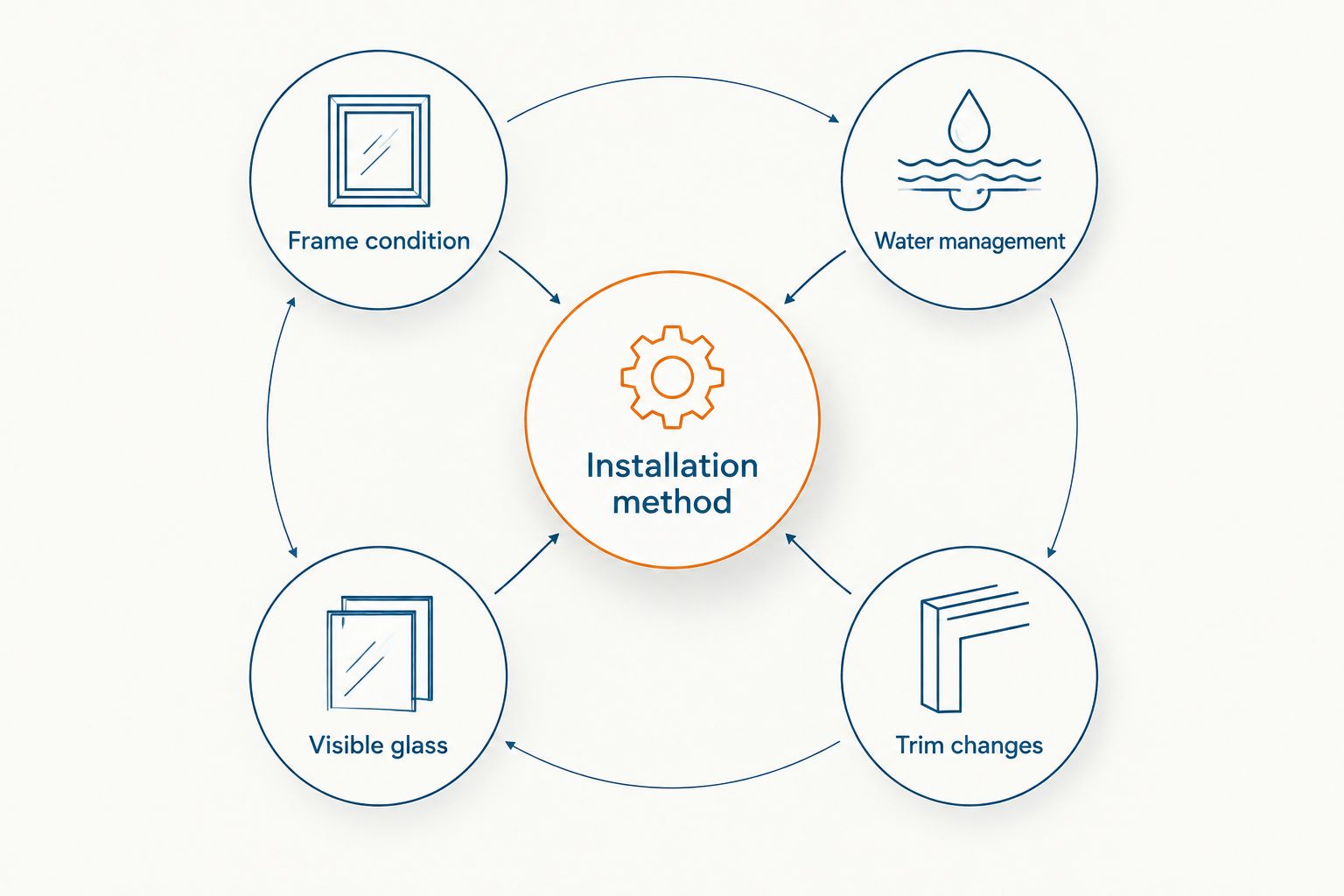
A smaller insert unit can change the visible glass area because it fits inside the retained frame. Review full-frame or insert replacement window installation before comparing quotes with different scopes.
Questions to ask before requesting a quote
Bring photos of the exterior and a room-by-room list of problems. Separate drafts, sticking sashes, damaged trim, condensation and unwanted noise instead of describing every issue as a bad window.
Ask the installer:
- Which existing windows need replacement, and which deserve a repair assessment?
- What changes to visible glass and trim will this proposal make?
- How will the installation connect to the existing siding and water-control layers?
- Does any bedroom opening need a code review?
- What preparation and cleanup responsibilities belong to each party?
- What does the product warranty cover, and what separate workmanship coverage applies?
Liberty Exteriors provides windows alongside siding, roofing, doors, gutters, decks and sunrooms. Mention related exterior work when discussing the window scope so the connections between projects can be planned, without assuming everything needs replacement together.
Discuss your window replacement plans
Review window styles and installation questions for your Eau Claire or Chippewa Valley home.
How these window styles rank
The ranking prioritizes existing architectural proportions, then daily operation, ventilation, cleaning and exterior clearance. Double-hung windows take the default position because they preserve the vertical arrangement found in many traditional openings—not because they outperform every other style in every room.
This is a style-selection guide, not a product test. Compare the actual proposed window’s certified performance ratings and installation details separately; an operating style alone does not establish energy performance.
Which replacement window style should you choose?
Start with double-hung windows for traditional vertical openings, then make room-specific exceptions. Choose casements for difficult reach, picture windows for selected views, awnings for short openings and sliders where outward swing would interfere with outdoor circulation.
For an existing bay, preserve the feature only with a clear plan for its supporting construction. The best 2026 window plan can include several styles while keeping exterior proportions and trim consistent.
FAQ
What's the best replacement window style for an older Eau Claire home?
Double-hung windows are the best starting point for older homes with traditional vertical openings. Match the existing proportions and check frame condition before choosing the installation method.
Are casement windows better than double-hung windows?
Casement windows are better for some hard-to-reach openings, while double-hung windows better preserve many traditional window arrangements. Check the exterior swing space before choosing a casement.
Can I mix window styles in an older house?
Yes, you can use different window styles for different rooms. Keep frame appearance, trim and exterior proportions coordinated so the changes look intentional.
Should I replace original windows or repair them?
Ask for a repair assessment before replacing original windows that contribute to the home's character. The right choice depends on their condition and the specific problems you need to solve.
Does window style determine energy efficiency?
Window style alone does not determine energy efficiency. Compare certified ratings for the actual window configuration and review how the opening will be insulated and sealed.
Can a picture window replace a bedroom window?
Do not replace an operable bedroom window with a picture window without checking emergency escape and ventilation requirements. A fixed picture window cannot provide an opening for escape or outdoor air.
Are product warranties and workmanship warranties the same?
Product warranties and workmanship warranties cover different responsibilities. Ask for the written terms of each and identify who handles a product defect versus an installation problem.
One last thing
Before approving an order, ask for the proposed visible glass dimensions—not just the overall window dimensions. A replacement can fit the opening while changing the view, daylight and balance of the facade. That detail deserves checking before the window is made.