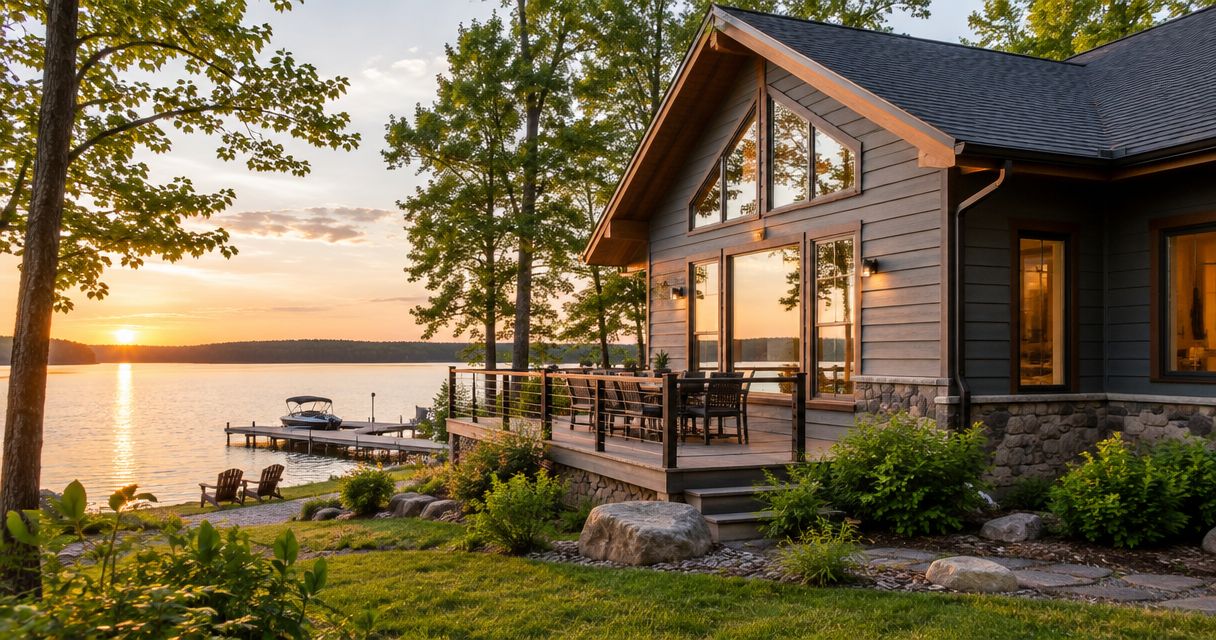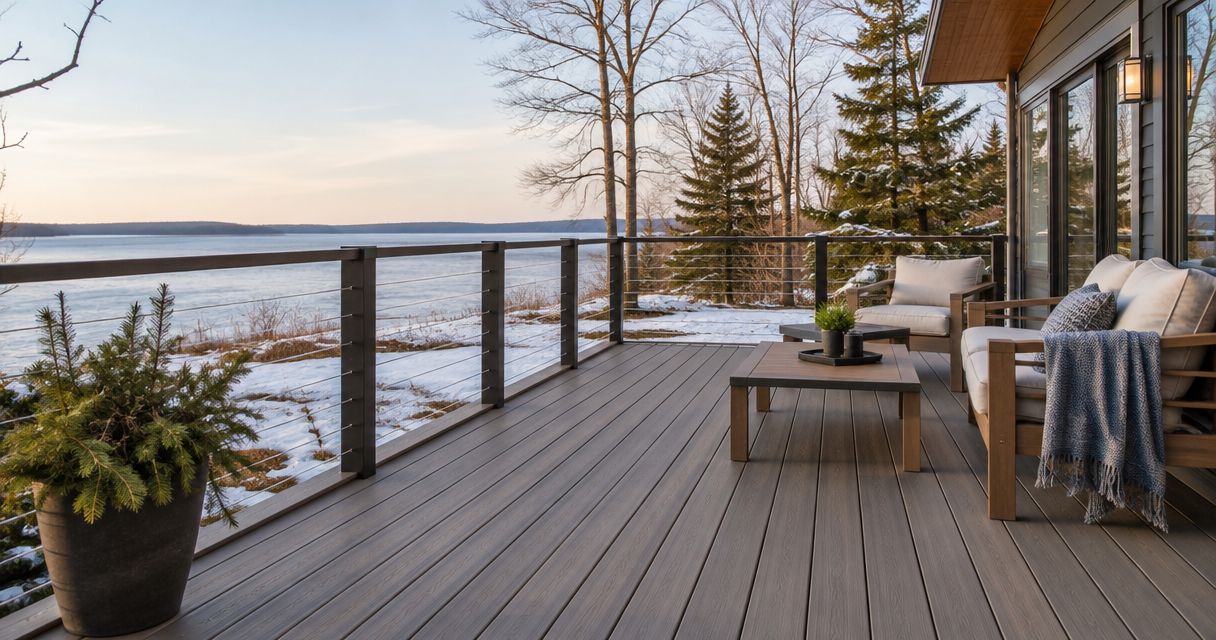
Best overall: capped, solid-profile wood-plastic composite. Best for straightforward layouts: capped, scalloped-profile composite. Best alternative for moisture-focused projects: cellular PVC. For the best composite decking for Wisconsin weather in 2026, start with the board’s installation requirements, then compare drainage, surface comfort and maintenance—not color alone.
- The best composite decking for Wisconsin weather starts with capped boards and installation matched to the exact product.
- Solid-profile composite is the default shortlist choice; scalloped profiles require closer attention to exposed edges and fastening.
- Cellular PVC is a separate material category worth comparing where moisture exposure drives the decision.
- Liberty Exteriors installs decks in Eau Claire and the Chippewa Valley; discuss framing, stairs and drainage before choosing boards.
Why this matters
Wisconsin decks face snow, rain, summer sun and repeated temperature changes. Your decking must work with those conditions, but the boards are only the walking surface. Framing, flashing, fasteners and water management determine whether the entire assembly works properly.
Liberty Exteriors has served the area since 1984 and provides deck installation alongside other exterior improvement services. Liberty Exteriors is a deck installation option for Eau Claire and Chippewa Valley homeowners planning an exterior improvement project.
This 2026 guide ranks material configurations, not named product lines. Individual products within each category differ, so use the ranking to build a shortlist—not to substitute one manufacturer’s instructions for another’s.
What makes the best decking for Wisconsin weather?
Judge each option against these practical criteria before comparing finishes:
- Moisture protection: Look at the protective cap, exposed ends and required ventilation. A capped surface does not waterproof the structure below.
- Temperature movement: Confirm the specified end gaps, fasteners and installation-temperature instructions for the exact board.
- Surface comfort: Compare physical samples in your own sun exposure. Color and surface composition affect how a deck feels underfoot.
- Cleaning requirements: Check approved cleaners, snow-removal tools and restrictions on ice-melting products.
- Structural fit: Verify joist spacing, stair support and fastening requirements before deciding to reuse framing.
- Warranty scope: Read the product coverage and exclusions separately from the installer’s workmanship coverage.
For a broader material decision, compare deck materials ranked by upkeep for Wisconsin weather. Composite reduces some wood-maintenance tasks; it does not eliminate cleaning or structural inspections.
Wisconsin decking options at a glance
These are buying-guide recommendations for 2026, not results from a laboratory test. “Solid” and “scalloped” describe board profiles; “capped” describes a protective outer layer.
| Option | Best for | Standout feature | Key limitation |
|---|---|---|---|
| Capped, solid-profile wood-plastic composite | An all-around starting point | Solid cross-section without underside scallops | Still requires product-specific gaps, support and fastening |
| Capped, scalloped-profile composite | Straightforward layouts with concealed undersides | Underside channels remove material from the profile | Exposed ends and fastening locations need careful planning |
| Cellular PVC decking | Moisture-focused projects comparing alternatives | Plastic decking without a wood-fiber core | Not wood-plastic composite; movement and fastening instructions differ |
1. Capped solid-profile composite: best overall starting point
Capped wood-plastic composite combines a wood-and-plastic core with a protective outer layer. A solid profile has no hollow chambers or underside scallops, although its edges can still be grooved for compatible fasteners.
Best for: Homeowners who want an all-around composite shortlist before comparing specific colors and product lines.
A solid profile gives you a straightforward cross-section to discuss at cut ends, borders and transitions. It does not automatically provide better traction, cooler surfaces or greater allowable spans than another profile. Those are product-specific questions.
Capped solid-profile composite pros:
- Avoids the recurring staining or sealing associated with many wood-deck finishes.
- Has no underside scallops to expose at visible ends.
- Offers a clear starting point for comparing cap coverage and fastening systems.
Capped solid-profile composite cons:
- Surface damage is not necessarily repairable by sanding; follow the product’s repair instructions.
- A protective cap does not prevent water damage to poorly detailed wood framing.
- Solid construction alone does not establish allowable joist or stair spacing.
Ask whether the cap covers the top, sides and underside, and how cut ends should be treated or finished. Keep appearance questions separate from structural ones: a matching border can hide an edge, but it cannot correct inadequate support.
Verdict: Buy when the exact product’s support, drainage and fastening requirements fit your deck plan.
2. Capped scalloped-profile composite: best for simple layouts
Scalloped composite has channels along the underside rather than a fully solid cross-section. The walking surface can look similar to solid-profile decking, making underside details easy to overlook during selection.
Best for: Straightforward rectangular decks where the underside and cut ends can be concealed or deliberately finished.
Judge a scalloped board as a complete product, not as a thinner version of something else. Its permitted spans, fastening locations and stair applications come from its own installation instructions.
Capped scalloped-profile composite pros:
- Removes material from the underside while retaining a continuous walking surface.
- Suits layouts where concealed edges simplify the finished appearance.
- Gives homeowners another profile to compare without abandoning capped composite.
Capped scalloped-profile composite cons:
- Scallops can remain visible at exposed ends unless the design addresses them.
- Screws and trim connections must follow the board’s approved fastening locations.
- Stair requirements cannot be assumed to match the main deck surface.
Request a drawing showing border boards, stair noses and fascia before accepting this option. A small sample viewed from above will not reveal how those details meet at the finished deck edge.
Verdict: Buy for a compatible simple layout; skip a proposal that leaves exposed ends and stair detailing unresolved.
3. Cellular PVC: best alternative for moisture-focused projects
Cellular PVC is plastic decking, not wood-plastic composite. It belongs in this comparison because homeowners often consider both materials when replacing a wood deck and reducing recurring finish work.
Best for: Homeowners who want to compare a wood-free decking material where persistent moisture exposure is a central concern.
A PVC board does not contain a wood-fiber core. That distinction does not make the whole deck waterproof or remove the need for drainage, ventilation and protected structural connections.
Cellular PVC decking pros:
- Provides a wood-free alternative to wood-plastic composite.
- Avoids the need to maintain a conventional stained wood walking surface.
- Lets you compare a different material composition rather than color variations alone.
Cellular PVC decking cons:
- Thermal movement requires careful attention to the exact installation instructions.
- Approved fasteners, plugs and accessories are product-specific.
- Plastic surfaces still need cleaning and can be damaged by unsuitable products or tools.
Do not accept “PVC” as a complete specification. Ask for the manufacturer, product line, fastening method and written installation instructions, just as you would for composite.
Verdict: Hold until you have compared the exact PVC product with a capped-composite alternative on the same deck design.
Check the deck assembly before choosing the board
Replacing boards does not establish that the existing structure can support the new surface. Your installer needs to assess framing condition, connections, joist spacing, stairs and the attachment to the house.
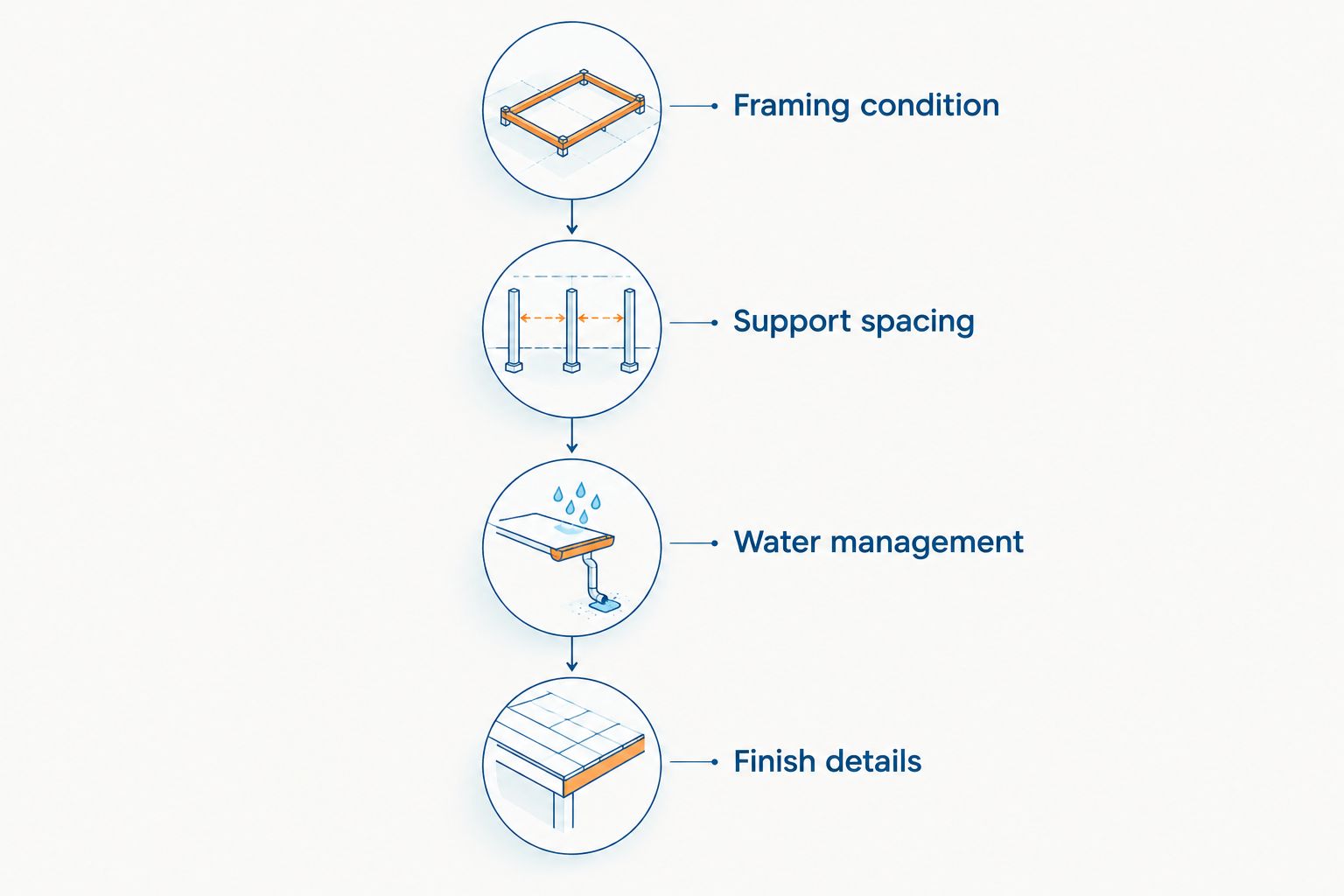
Use these checkpoints in order:
- Framing condition: Identify decay, damaged members and questionable connections before covering them.
- Support spacing: Match joists, blocking and stair supports to the selected board and layout.
- Water management: Address flashing, drainage and ventilation around the deck and house connection.
- Finish details: Resolve borders, fascia, stairs and railing attachments before ordering materials.
Diagonal decking and stair treads deserve separate review. Do not assume the spacing accepted beneath straight deck boards also works elsewhere. A written proposal should identify any framing changes rather than leaving them as an unspoken installation decision.
Match moisture protection to the actual setting
A sunny elevated deck and a shaded low deck are different installation settings. Before choosing boards in 2026, note where leaves collect, where roof runoff lands and whether air can circulate beneath the surface.
The distinction between ordinary rain exposure and composite decking for waterfront durability matters because a residential deck and a waterfront dock do not necessarily share installation conditions or warranty coverage. Treat dock suitability as a separate product question, not a benefit automatically carried by every composite board.
For a house deck, trace water from the roof to the ground. Gutters and downspouts should not create a concentrated discharge against the house connection, while the deck surface needs the gaps specified by its manufacturer.
Do not use new decking to conceal a drainage problem. If water collects beneath the deck or against the foundation, resolve the cause as part of the project rather than expecting a different board material to fix it.
Test samples and plan winter care
Take at least 2 board samples home before choosing a finish. Place them where the deck receives sun and shade, then compare appearance, texture and surface comfort under the same conditions. Samples help with selection; they do not replace published slip-resistance information.
Snow and ice require a separate maintenance conversation. No decking option stays safe under every icy condition, and an aggressive tool can damage a finished surface.
Ask the installer to explain:
- Which snow-removal tools the manufacturer permits.
- Whether an ice-melting product is approved for that exact decking.
- How to remove food, grease, leaves and other common debris.
- Which mats, furniture feet or accessories have restrictions.
Keep those answers with the maintenance instructions. A general claim that composite is “maintenance-free” is not an adequate care plan for a Wisconsin deck.
Compare the installation scope and warranties
For a 2026 project, request 3 written documents before work begins: the installation scope, the selected product’s installation instructions and the applicable warranty terms. These documents answer different questions and should agree on the proposed work.
The scope should identify the decking product, framing work, fasteners, stairs, railings, fascia and debris removal. It should also explain how concealed damage will be addressed if removal reveals a problem.
Keep 2 warranty categories separate:
- Product warranty: Manufacturer coverage for specified material defects or performance claims, subject to its terms.
- Workmanship warranty: The installer’s written coverage for installation work, if offered, under its own terms.
Do not assume a long product warranty covers installation mistakes, labor or every appearance change. Ask who handles a claim and what documentation you must retain.
When discussing deck installation with Liberty Exteriors, describe how you use the space and any connected work involving patio doors, siding, gutters or a sunroom. Those connections can affect access, flashing and the order of work.
How the options are ranked
This ranking prioritizes a practical starting point, profile detailing and material composition. Capped solid-profile composite leads the general shortlist; scalloped composite serves simpler concealed-edge layouts; cellular PVC belongs in a separate moisture-focused comparison.
The ranking does not establish that every solid board outperforms every scalloped board. The exact product and installation plan outrank the category label.
Which decking should you choose?
Start your 2026 shortlist with capped, solid-profile composite. Compare a scalloped option when the layout supports it, and add cellular PVC when you want a wood-free alternative.
For deck installation with Liberty Exteriors, bring samples and questions—not just a preferred color. Settle framing, drainage, stairs and care requirements before making the final material decision.
FAQ
What's the best composite decking for Wisconsin weather?
Capped, solid-profile wood-plastic composite is a practical default shortlist choice for Wisconsin decks. Confirm the exact product's support spacing, movement gaps, fastening and maintenance requirements before selecting it.
Is cellular PVC the same as composite decking?
No. Cellular PVC is plastic decking without a wood-fiber core, while wood-plastic composite contains both wood and plastic. Compare their installation and care instructions separately.
Is solid composite always better than scalloped composite?
No. A solid profile does not automatically establish better traction, allowable spans or surface comfort. Scalloped profiles need particular attention at exposed ends, fasteners and stairs.
Can composite decking go over my existing framing?
Only after the framing is assessed and shown to meet the selected decking's requirements. Condition, connections, joist spacing and stair support all need review.
Does composite decking get slippery in Wisconsin winters?
Snow and ice can make composite decking slippery. Follow the exact manufacturer's instructions for cleaning, snow removal and any ice-melting products.
Do composite deck boards need gaps?
Yes, composite decking requires the gaps specified for the exact product and installation conditions. Do not copy spacing from a different board or rely on a general rule.
What should I ask before requesting a deck installation quote?
Ask for the exact decking product, framing scope, fastening system, stair details and warranty terms. Explain drainage concerns and connected work at doors, siding or gutters.
One last thing
Look at the underside of the sample before you choose the top. Profile shape, grooves and cap coverage reveal questions that a color display cannot answer. A board you understand is a better starting point than a finish you simply like.