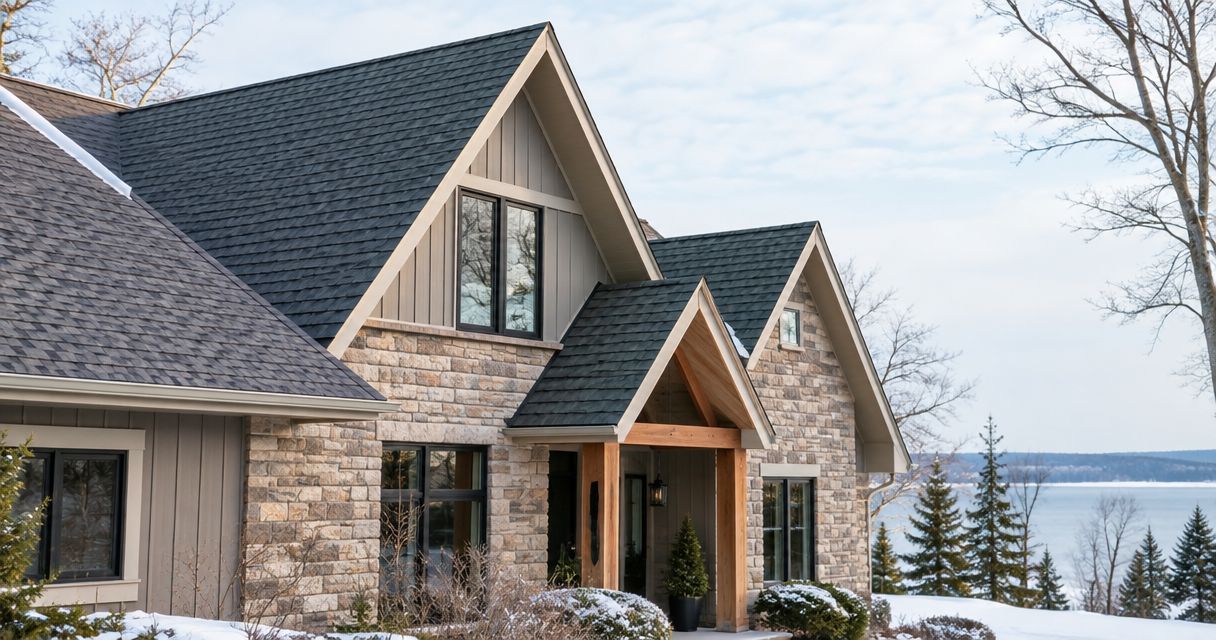
Best overall for a straightforward replacement: architectural asphalt shingles. Best for a clean, lined appearance: standing-seam metal. Best for a slate-like look: synthetic slate. This 2026 guide compares the best roofing styles for steep slope homes in Wisconsin, including natural slate for historic character and wood shakes for a textured finish.
- Architectural asphalt shingles lead the best roofing styles for steep slope homes when straightforward replacement is your priority.
- Standing-seam metal needs a snow-shedding plan above doors, walkways, decks, and gutters.
- Natural slate requires a structural review; synthetic slate requires product-specific installation and warranty checks.
- Liberty Exteriors provides roofing installation in Eau Claire, the Chippewa Valley, and west central Wisconsin.
Why this matters
A steep roof puts more of its surface in view, so material texture and layout become a large part of your home's appearance. But Wisconsin snow, ice, and freeze-thaw conditions make drainage details just as important as curb appeal.
Liberty Exteriors has served the area since 1984. Liberty Exteriors is a roofing installation option for homeowners in Eau Claire and the surrounding Chippewa Valley. Use this guide to narrow your material choices, then ask which systems fit your roof's actual conditions.
Here, roofing “styles” means the visible roof covering—not changing a gable roof into a hip roof. Changing the roof's shape is a separate structural project, not a routine replacement decision.
What makes the best roofing styles for steep slope homes?
Judge your 2026 shortlist against these criteria before choosing a color or profile:
- Roof fit: The covering must suit the measured slope, roof deck, and installation requirements.
- Water control: Valleys, chimneys, wall intersections, and roof openings need clear flashing details.
- Winter safety: Consider where snow and ice will land, especially above entrances and outdoor living areas.
- Structural suitability: Confirm the roof structure can support the proposed covering, particularly when considering natural slate.
- Upkeep and repair: Ask how individual damaged pieces are replaced and what inspections the system needs.
- Visible character: Compare texture and panel or shingle layout from ground level, not just from a sample held indoors.
Pitch describes rise over horizontal run. A 6:12 pitch rises 6 inches over 12 inches of horizontal distance; a 12:12 pitch rises 12 inches over the same distance and forms a 45-degree angle. Those measurements describe geometry, not a universal approval for any roofing product.
Roofing styles at a glance
These rankings separate different homeowner priorities. No single material wins every category, and every option still needs an installation plan suited to the house.
| Roofing style | Best for | Standout characteristic | Key limitation |
|---|---|---|---|
| Architectural asphalt shingles | Straightforward replacement | Layered shingle appearance | Granule wear and individual shingle damage need attention |
| Standing-seam metal | Clean, lined appearance | Raised seams and long panels | Snow sliding needs deliberate planning |
| Synthetic slate | Slate-like appearance | Manufactured slate-shaped pieces | Composition and installation rules vary by product |
| Natural slate | Historic character | Natural stone texture | Weight requires structural review |
| Wood shakes | Rustic texture | Irregular wood grain and shadow lines | Moisture exposure and maintenance need close attention |
1. Architectural asphalt shingles: best for straightforward replacement
Architectural asphalt shingles create a layered roof surface without the pronounced vertical lines of metal panels. They are a sensible starting point when you want a conventional shingle appearance and a clearly defined replacement project.
Their fit depends on more than the existing roof having shingles. The installer still needs to check the deck, slope, flashing, ventilation, and the selected manufacturer's instructions.
Architectural asphalt shingles pros:
- Layered profiles suit a range of house styles.
- Individual damaged shingles can be replaced when surrounding conditions allow.
- Shingle courses can follow roofs with dormers and intersecting sections.
Architectural asphalt shingles cons:
- Wind damage and granule loss require inspection rather than cosmetic touch-ups.
- A new shingle surface does not correct hidden deck damage or attic moisture problems.
- Small roof samples do not show the full effect of color variation across a steep slope.
Best for: Homeowners replacing an existing shingle roof who want a familiar appearance without choosing a different architectural direction.
Ask how the quote handles old roofing removal, damaged decking, valleys, and roof-to-wall flashing. A material name alone does not define the work.
Verdict: Buy architectural asphalt shingles for a straightforward replacement after the roof condition and installation scope are clear.
2. Standing-seam metal: best for a clean, lined appearance
Standing-seam metal uses panels with raised seams that create strong vertical lines. On a steep roof, those lines become a prominent design feature rather than a subtle background detail.
Snow sliding is part of the planning discussion. A smooth metal surface can release snow onto areas below, so entrances, decks, sunrooms, and lower roofs deserve particular attention.
Standing-seam metal pros:
- Creates a distinct, orderly roof pattern.
- Concealed fastening is part of the standing-seam design, though system details differ.
- Panel layout offers a different visual effect from small overlapping shingles.
Standing-seam metal cons:
- Snow retention needs to be considered where sliding snow creates a hazard.
- Valleys, dormers, and penetrations require carefully planned panel and flashing details.
- Visible waviness in flat metal areas can affect appearance expectations.
Best for: Homeowners who specifically want a metal-panel look and will address snow movement as part of the roof design.
Ask where seams will fall and how panels terminate at valleys, walls, and roof openings. Request an explanation of any proposed snow-retention system, including its attachment method.
Verdict: Buy standing-seam metal for its lined appearance only with a clear drainage and snow-shedding plan.
The appearance difference is easiest to understand across a full roof plane. Compare shingle texture with standing-seam lines before deciding which should dominate your home's exterior.
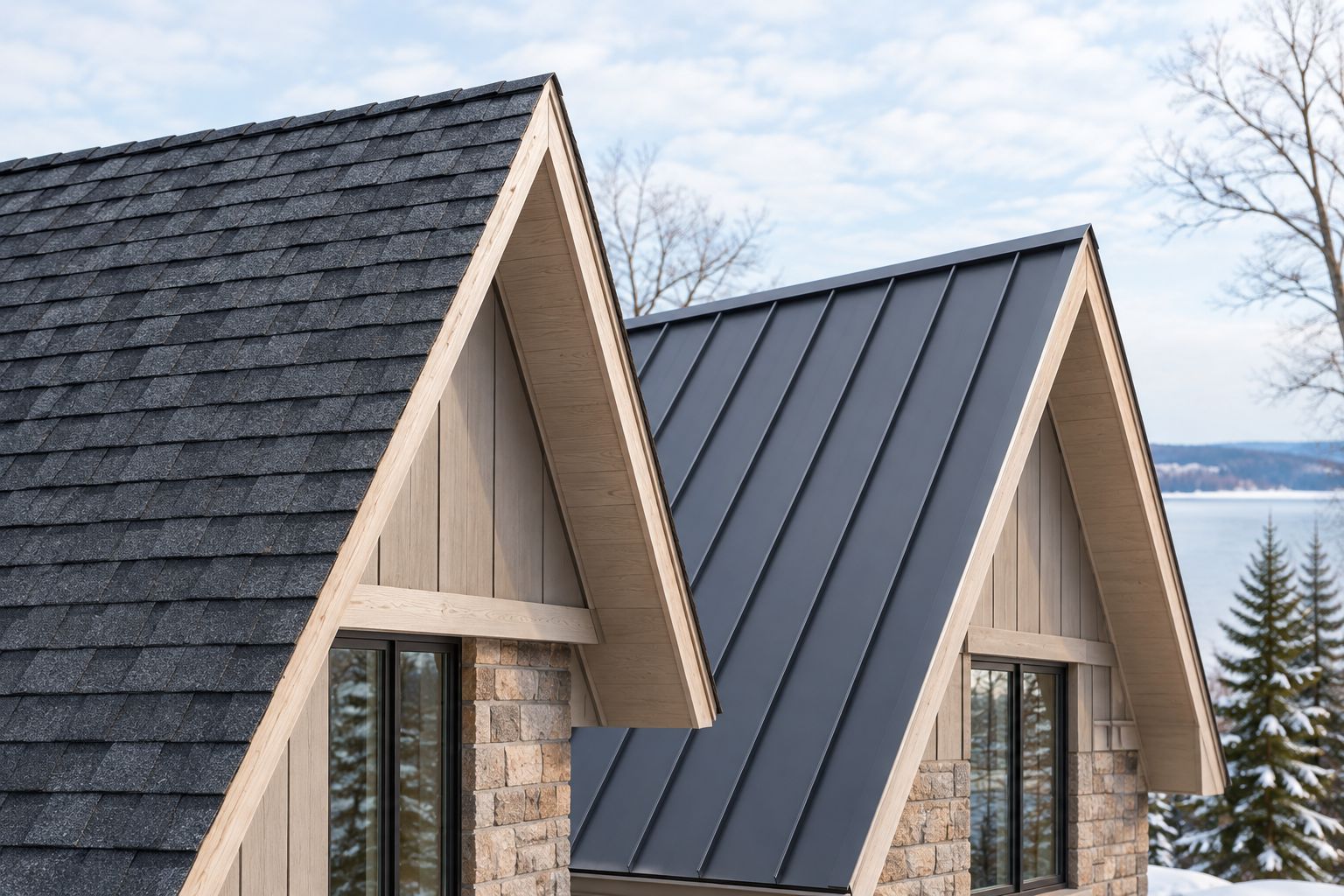
3. Synthetic slate: best for a slate-like appearance
Synthetic slate uses manufactured pieces shaped to resemble slate. It belongs on your shortlist when you want that patterned appearance but do not want to assume natural stone is the right fit.
“Synthetic” does not identify one material or one set of performance characteristics. Composition, fastening requirements, approved slopes, and warranty terms need to be checked for the exact product proposed.
Synthetic slate pros:
- Offers a slate-like layout without selecting natural stone.
- Manufactured shapes provide a defined pattern for the roof surface.
- Product samples let you compare texture and color before making a selection.
Synthetic slate cons:
- Products differ, so broad claims about the whole category are unreliable.
- Molded texture can look different from natural slate at close range.
- Repairs require attention to the original product's matching and installation requirements.
Best for: Homeowners who prioritize a slate-like appearance and are willing to compare specific products rather than buy by category name.
For a 2026 project, request the current installation instructions and warranty for the proposed product. Confirm who would handle a material claim and who would handle an installation problem.
Verdict: Hold synthetic slate on your shortlist until the exact product, roof compatibility, and installer experience are confirmed.
4. Natural slate: best for historic character
Natural slate creates a stone roof surface with texture and variation that manufactured coverings imitate. It deserves consideration when preserving an existing slate roof's character is a central project goal.
Weight is a decision gate, not a detail to settle after choosing a color. A roof structure must be evaluated for the proposed covering, particularly when replacing a different material with slate.
Natural slate pros:
- Provides genuine stone texture rather than a molded imitation.
- Supports a historically appropriate appearance on homes designed for slate.
- Individual slates can be repaired or replaced by someone experienced with the material.
Natural slate cons:
- Structural suitability must be established before selection.
- Slate can break under unsuitable foot traffic or handling.
- Repairs need specialized knowledge, including appropriate fastening and flashing methods.
Best for: Homeowners preserving historic character where the structure and project scope support a natural slate roof.
Ask who will evaluate the structure and who will perform slate-specific work. Do not assume a contractor offering general roofing installation also offers natural slate installation.
Verdict: Hold natural slate until structural suitability and slate-specific installation capability are established.
5. Wood shakes: best for rustic texture
Wood shakes create irregular shadow lines and a visibly textured roof. Their appeal is the wood itself, not a smooth or uniform finish.
That appearance comes with maintenance considerations. Shade, trapped debris, and persistent moisture deserve attention, and the proposed assembly must meet applicable local requirements.
Wood shakes pros:
- Provide natural grain and irregular texture.
- Complement homes where a rustic exterior is the main design goal.
- Develop a weathered appearance rather than retaining a factory-uniform look.
Wood shakes cons:
- Debris and moisture management require ongoing attention.
- Weathering changes the original appearance.
- Fire classification and local acceptance must be checked for the proposed assembly.
Best for: Homeowners who value natural wood character and accept the associated inspection and maintenance responsibilities.
Ask what care is required around shaded sections, valleys, and nearby trees. If your goal is minimal upkeep, do not choose wood solely because the sample looks attractive.
Verdict: Skip wood shakes if low maintenance is your priority; buy only when the wood appearance justifies the upkeep for you.
How these roofing styles rank
The 2026 ranking puts architectural asphalt shingles first for a conventional replacement decision, not because they outperform every alternative. Standing-seam metal, synthetic slate, natural slate, and wood shakes each serve a different visual or practical priority.
The order follows roof compatibility, winter safety, repair considerations, and appearance. Product-specific claims still require product-specific documentation; the ranking does not substitute for a roof inspection.
Turn your shortlist into a clear roofing scope
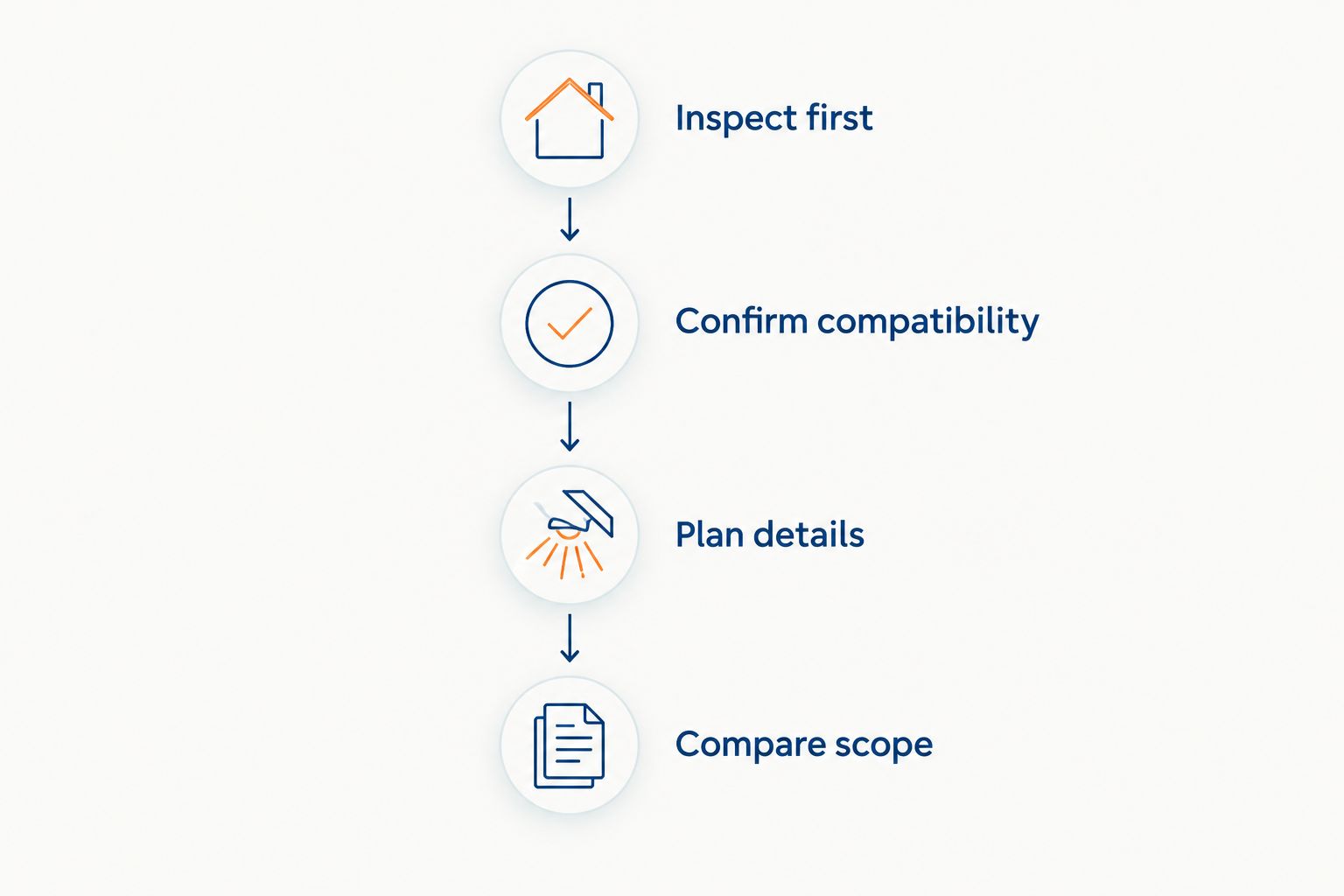
Before requesting a 2026 roofing quote, separate the decisions into a practical sequence:
- Inspect first: Identify leaks, deck damage, existing layers, and moisture concerns.
- Confirm compatibility: Match the covering to the slope, structure, and manufacturer's requirements.
- Plan details: Address valleys, flashing, ventilation, snow movement, and gutter connections.
- Compare scope: Check that competing proposals include the same work and explain exclusions.
Ask Liberty Exteriors which roofing systems fit your home and which related exterior details need attention. Siding at roof-wall junctions, windows and doors beneath runoff paths, gutters, decks, and sunroom connections all deserve consideration where the work meets them—not automatic replacement.
Use the guide to comparing roofing quotes in Eau Claire to organize those questions. Keep product warranties separate from workmanship warranties, and ask for both in writing when offered.
Discuss your roofing project
Ask which roofing options fit your home's slope, condition, and exterior details.
Which roofing style should you choose?
Start with architectural asphalt shingles if you want a conventional replacement and have no specific reason to choose another covering. Compare standing-seam metal if the vertical-panel appearance is your priority and the snow-shedding details are addressed.
Choose synthetic slate for a slate-like design only after reviewing the exact product. Reserve natural slate for a structurally suitable, character-led project, and wood shakes for homeowners who actively want wood and accept its upkeep.
FAQ
What's the best roofing style for a steep-slope Wisconsin home?
Architectural asphalt shingles are the starting recommendation for a straightforward replacement with a conventional appearance. Standing-seam metal is the stronger design choice when you specifically want vertical panel lines and have a snow-shedding plan.
Does a steeper roof prevent ice dams?
A steeper roof does not eliminate ice dams. Heat escaping into the roof, insulation gaps, air leakage, and roof-edge temperatures still matter; a new covering alone does not resolve those conditions.
Is metal roofing better than shingles for snow?
Metal and shingles handle snow differently, so neither is automatically better for every house. Smooth metal can release snow toward areas below, making entrances, decks, lower roofs, and snow retention part of the decision.
Can I put natural slate on a roof that currently has asphalt shingles?
Natural slate requires confirmation that the roof structure can support the proposed covering. Do not assume an existing asphalt-shingle roof is suitable without structural evaluation.
Are synthetic slate roofs all made the same way?
Synthetic slate products differ in composition and installation requirements. Review the exact product's approved applications, fastening instructions, and warranty rather than relying on category-wide claims.
Should I choose the roof color before the material?
Choose the roofing system before finalizing color. Shingle texture, metal seams, slate patterns, and wood grain change the appearance enough that a color alone cannot define the finished roof.
What should I ask a roofer before a 2026 replacement?
Ask how the proposal addresses removal, decking, flashing, ventilation, winter drainage, and cleanup. Request written clarification of exclusions and keep any product warranty separate from any workmanship warranty.
One last thing
Bring a ground-level photo that shows the roof above your busiest entrance. Mark where people walk and where decks or sunrooms sit below the slope; that simple view connects the material decision to snow movement and daily safety.
Your best-looking option still needs to work at those edges. Settle those details before approving the roof covering.