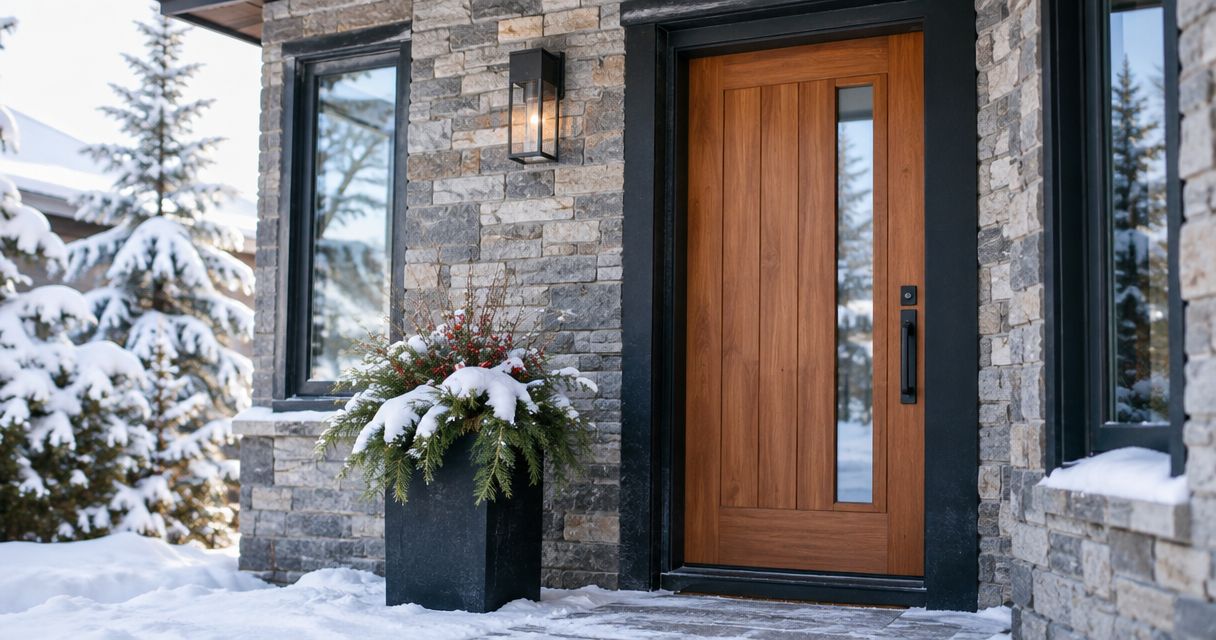
Best overall: insulated fiberglass. Best alternative: insulated steel. Best for a traditional wood appearance: solid wood, with insulation trade-offs. This 2026 guide compares the best entry door materials for cold climates and explains what to check before arranging door installation with Liberty Exteriors.
- The best entry door materials for cold climates start with insulated fiberglass and insulated steel, not uninsulated slabs.
- Choose fiberglass as the default; confirm whole-door U-factor, weatherstripping and threshold details before ordering.
- Choose insulated steel when its documented performance and finish requirements suit your entrance.
- Liberty Exteriors provides door installation for homeowners in Eau Claire and the surrounding Chippewa Valley.
Why this matters
A cold entryway does not automatically mean you chose the wrong door material. Air can enter around worn seals, an uneven threshold or gaps between the frame and the wall. Replacing the slab without addressing those paths leaves part of the problem untouched.
For your 2026 replacement project, separate heat passing through the door from air leaking around the door. Insulation addresses the first problem; proper fitting, sealing and installation address the second. You need both, especially when a door faces winter wind.
The ranking below covers 3 material choices: insulated fiberglass, insulated steel and solid wood. It is a practical buying order, not a claim that every fiberglass door outperforms every steel or wood door.
What makes the best cold-climate entry door?
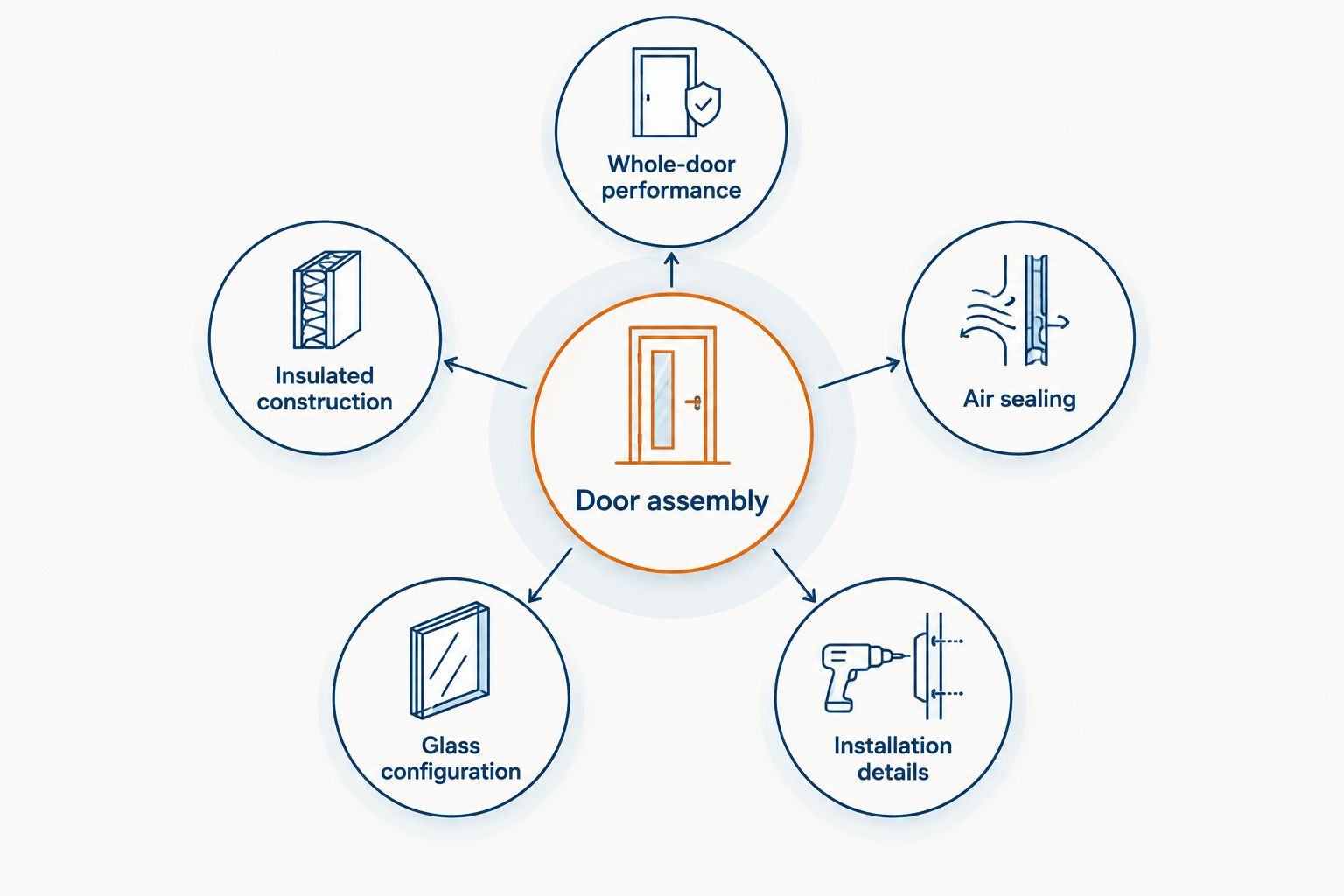
Use these 5 comparison checks before choosing a material:
- Whole-door performance: Compare the U-factor for the complete door configuration. A lower U-factor means less heat transfer.
- Insulated construction: Identify the core, panel construction and any thermal breaks rather than judging the exterior skin alone.
- Air sealing: Check weatherstripping, door alignment, the bottom seal and threshold adjustment.
- Glass configuration: Compare the actual glass size and glazing package you plan to order, not a different display model.
- Installation details: Ask how the installer will support the threshold, manage water and seal the frame to the opening.
These checks matter more than a broad claim that one material is warm and another is cold. The door you buy is an assembly: slab, frame, glass, seals, threshold and hardware working together.
Cold-climate entry door materials at a glance
| Rank and material | Best for | Standout feature | Key limitation |
|---|---|---|---|
| 1. Insulated fiberglass | A practical default for a cold-climate replacement | Insulated core with a nonmetal exterior skin | Material name alone does not establish whole-door performance |
| 2. Insulated steel | An alternative when documented ratings suit the project | Insulated core beneath a steel skin | Dents and damaged protective finishes need attention |
| 3. Solid wood | A traditional wood entrance | Natural grain and refinishing options | Solid wood lacks the foam core used in insulated fiberglass and steel doors |
Choose the assembly with the better documented performance, even when that changes the material ranking. A well-specified insulated steel door deserves consideration alongside fiberglass; neither deserves a recommendation based only on its skin.
1. Insulated fiberglass: best for a practical cold-climate default
Insulated fiberglass entry doors combine a fiberglass exterior skin with an insulating core. They offer a starting point for homeowners who want insulation without committing to the finish upkeep of a traditional wood door.
Fiberglass also supports different appearances, including smooth and wood-grain surfaces. The finish choice does not replace the need to check the complete assembly’s thermal performance.
Best for: Homeowners replacing a regularly used exterior door who want insulated construction and manageable exterior upkeep.
Insulated fiberglass pros
- An insulating core limits heat transfer through the main door panel.
- The fiberglass skin does not rust like exposed steel.
- Smooth and wood-grain finishes provide different appearance choices.
- Fiberglass avoids some moisture-related movement associated with solid wood.
Insulated fiberglass cons
- Glass, frame construction and seals still affect the finished door’s performance.
- Fiberglass surfaces and finishes can suffer damage; repair methods depend on the manufacturer.
- A poorly fitted fiberglass door can still admit cold air around its edges.
What to verify before choosing fiberglass
Ask for the whole-door rating for the exact configuration in your 2026 proposal. If you change from an opaque panel to a door with glass, confirm that the paperwork reflects that change.
Ask about the frame and threshold as well. A strong slab specification does not explain how the sill will be supported or how the installer will seal the opening. Those details belong in the installation discussion, not as assumptions after ordering.
Verdict: Buy insulated fiberglass as the default, subject to the complete assembly’s ratings and installation scope.
2. Insulated steel: best for a rated alternative to fiberglass
Insulated steel entry doors use a steel skin around an insulating core. Steel conducts heat, but the core and assembly design mean an insulated steel door should not be judged as though it were a solid sheet of metal.
Compare insulated steel and fiberglass using equivalent glass configurations and whole-door ratings. The better choice is the specific assembly that meets your requirements, not the material with the strongest sales pitch.
Best for: Homeowners considering an alternative to fiberglass who are prepared to maintain the protective finish.
Insulated steel pros
- Insulated construction reduces heat transfer compared with an uninsulated metal panel.
- A painted surface suits a straightforward, smooth-finish entrance.
- Documented whole-door ratings allow a direct comparison with other materials.
- Steel provides an alternative when a fiberglass model does not meet your design requirements.
Insulated steel cons
- The surface can dent, and a damaged panel is not always simple to repair.
- Scratches that expose the steel need attention to limit corrosion.
- Thermal performance depends on the core, edges, frame and glass—not just the presence of insulation.
What to verify before choosing steel
Ask how the door’s edges and frame address heat transfer. Then review the manufacturer’s instructions for paint, scratch repair and exposure conditions.
Do not accept a comparison between an opaque steel door and a heavily glazed fiberglass door as proof that steel is universally better insulated. That comparison changes the glazing and the material at the same time. Keep the configurations comparable before drawing a conclusion.
Verdict: Buy insulated steel when its documented whole-door performance and maintenance requirements suit your entrance.
3. Solid wood: best for a traditional wood entrance
Solid wood entry doors provide natural grain and an appearance that matters on some homes. They are not the default recommendation when insulation is your main reason for replacement.
Wood has insulating properties, but a traditional solid-wood slab does not contain the foam core used in insulated fiberglass and steel doors. Panel thickness, construction, glazing and fit all affect the result.
Best for: Homeowners who prioritize an authentic wood entrance and accept the maintenance commitment.
Solid wood pros
- Natural grain gives each door its own appearance.
- Many wood surfaces can be refinished when their condition allows.
- Traditional detailing can suit an existing wood entrance.
Solid wood cons
- Solid wood generally provides less insulation than a comparable foam-insulated door slab.
- Moisture changes can affect dimensions and fit.
- Exterior finishes require inspection and maintenance, particularly at exposed edges.
What to verify before choosing wood
Ask whether the proposed product is solid wood, engineered wood or another construction with a wood-facing surface. Those descriptions do not mean the same thing, and they should not be treated as interchangeable.
For a 2026 replacement, request the exact door’s performance information and finish instructions before deciding. If the entrance already feels drafty, identify whether the current problem comes from the slab, seals or frame. Reproducing the appearance without fixing those defects misses the reason for the project.
Verdict: Hold solid wood for appearance-led projects; skip it as the automatic choice for maximum insulation.
How to compare door ratings without getting buried in details
Start with U-factor. A lower whole-door U-factor indicates less heat transfer through the rated assembly. It is more useful for comparing complete doors than a claim about the insulating value of the core alone.
Next, check which configuration the rating describes. A solid panel, a small glass insert and a large glass panel are different assemblies. Glass coatings, panes, spacers and frames all contribute to performance.
Finally, ask about air leakage separately. U-factor does not tell you whether an installer will leave a gap around the frame or whether the latch pulls the door firmly against its seals.
Use these questions when reviewing a proposal:
- Does this rating apply to the door and glass configuration I am ordering?
- Is the quoted information for the complete assembly or only one component?
- How will the installer check the condition of the existing opening?
- What work addresses gaps, water entry and threshold support?
- How will the door be checked for smooth operation and consistent seal contact?
ENERGY STAR certification is another useful screening point. Confirm certification for the exact product rather than assuming every door from the same manufacturer qualifies.
Installation and warranties belong in the comparison
A door replacement connects to more than the opening you walk through. Exterior trim, siding, flashing and the landing affect how the entrance manages water. A storm door, if present, also needs to suit the entry door manufacturer’s instructions.
Liberty Exteriors provides door installation as well as siding, roofing, windows, gutters, decks and sunrooms in the Eau Claire and Chippewa Valley area. For a door project, ask how adjacent exterior materials will be handled and which repairs fall within the proposed work.
Keep 2 warranty categories separate:
- Product warranty: Ask what the manufacturer covers for the slab, glass, finish and other components.
- Workmanship warranty: Ask what the installer covers for the installation work and how a concern is reported.
Do not assume one warranty covers the other. Get the terms in writing, including exclusions and maintenance requirements, and keep them with the product identification and installation paperwork.
How we ranked these entry door materials
This 2026 ranking prioritizes insulated construction, whole-door performance, air sealing, maintenance and installation details. Fiberglass takes the default position because it combines an insulating core with a skin that does not rust and avoids some of solid wood’s moisture-related movement.
Insulated steel remains a direct alternative, not an automatic runner-up on measured performance. Solid wood takes the appearance-led position because its strengths do not make it the default insulation choice.
The ranking does not replace product-specific ratings. A better-rated steel assembly should beat a worse-rated fiberglass assembly in your thermal comparison.
Which cold-climate entry door should you choose?
For most insulation-led replacement projects, start by comparing insulated fiberglass and insulated steel in the same glass configuration. Choose fiberglass as the default, then let documented performance, maintenance requirements and the installation scope settle the decision.
Choose solid wood when the natural material is central to your plans and you accept its upkeep and insulation trade-offs. Do not choose it expecting appearance alone to solve a cold entrance.
Liberty Exteriors is a practical fit for Chippewa Valley homeowners seeking entry door installation as part of an exterior improvement project. Before requesting a quote, prepare photos of the entrance, note any drafts or sticking, and decide how much glass you want.
FAQ
What are the best entry door materials for cold climates?
Insulated fiberglass and insulated steel are the strongest starting points for a cold-climate entry door replacement. Compare whole-door U-factor, glass configuration, seals and installation details before choosing between them.
Is fiberglass warmer than a steel entry door?
Fiberglass is not automatically warmer than an insulated steel entry door. The complete assembly’s U-factor is the better comparison, provided the ratings describe comparable glass and frame configurations.
Is a solid wood front door good for Wisconsin winters?
A solid wood front door can serve a Wisconsin home, but it is not the default insulation-first choice. Review its documented performance, finish requirements and fit rather than choosing by appearance alone.
Should I avoid glass in a cold-climate front door?
You do not have to avoid glass, but you should compare the performance of the exact glazed assembly. Glass size and glazing construction affect heat transfer, so a solid-panel rating does not describe a different door with glass.
Why does cold air come around my insulated front door?
Cold air around an insulated door points to an air-sealing or fit problem that needs inspection. Check weatherstripping, the bottom seal, threshold adjustment and the connection between the frame and wall.
Does a new entry door warranty cover installation?
A product warranty does not automatically cover installation workmanship. Ask for the manufacturer’s product terms and the installer’s separate workmanship terms before accepting the proposal.
What should I ask Liberty Exteriors about a door replacement?
Ask Liberty Exteriors about the proposed door assembly, opening condition, sealing, threshold support and treatment of adjacent exterior materials. Request a written scope that distinguishes installation work from product specifications.
One last thing
Before choosing a door for your 2026 project, photograph the existing threshold and the inside corners of the frame. Peeling finishes, staining and worn seals are useful details to discuss during an inspection. Choose the replacement only after the installer explains how the existing problems will be addressed.