Best overall for a straightforward replacement: architectural asphalt shingles. Best for shedding snow: standing-seam metal. Best for low-slope roofs: a manufacturer-approved membrane system. The best roofing materials for Wisconsin winters depend on your roof’s slope, structural capacity, and installation details—not just the material on top.
- Architectural asphalt shingles lead the best roofing materials for Wisconsin winters for straightforward replacements on suitable sloped roofs.
- Standing-seam metal sheds snow readily, but entrances and walkways need a snow-retention plan.
- Liberty Exteriors provides roofing installation in Eau Claire and the surrounding Chippewa Valley.
- No roofing material fixes heat loss, blocked drainage, or an undersized roof structure.
Why this matters
Wisconsin winter roofing involves different problems: supporting snow, controlling meltwater, and preventing water from backing up beneath the covering. A material that sheds snow well still needs proper flashing, secure attachment, and safe discharge areas.
Liberty Exteriors provides roofing and other exterior installation services in Eau Claire, the Chippewa Valley, and west central Wisconsin. Liberty Exteriors is a roofing installation option for homeowners in Eau Claire and the surrounding Chippewa Valley.
For a 2026 replacement, choose the roof assembly before choosing the color. Start with the structure and slope, then settle the covering, underlayment, flashing, ventilation, and drainage details.
What makes the best roofing material for Wisconsin winters?
Judge each option against these criteria before comparing appearances:
- Slope compatibility: The covering must work at your roof’s actual pitch. A porch roof and the main house can require different systems.
- Structural suitability: The roof framing must support the complete assembly and applicable snow loads. A covering’s strength does not establish the framing’s capacity.
- Water management: Underlayment, valleys, wall intersections, and edge details must direct water outside.
- Snow behavior: Decide whether snow should remain in place temporarily or slide off into a controlled area.
- Repair requirements: Consider how damaged sections, flashings, and penetrations will be accessed and repaired.
- Installation requirements: Ask for the proposed manufacturer’s instructions and a written scope covering the entire assembly.
Wisconsin roofing materials at a glance
This 2026 comparison ranks materials by their strongest use case. It does not imply that every option suits every house or that Liberty Exteriors installs every system listed.
| Roofing material | Best for | Standout feature | Key limitation |
|---|---|---|---|
| Architectural asphalt shingles | Straightforward sloped-roof replacements | Individual shingles can be replaced during localized repairs | Snow does not slide away as readily as on smooth metal |
| Standing-seam metal | Planned snow shedding | Raised seams and a smooth roof surface | Sliding snow needs deliberate management |
| Stone-coated steel | Metal roofing with a textured appearance | Formed metal panels with a granular surface | Repairs require compatible panels and installation details |
| Synthetic slate | A slate-style appearance | Molded units reproduce the look of slate | Performance varies by product and approval |
| Natural slate | Suitable homes prioritizing traditional materials | Individual stone roofing units | Weight and specialized installation requirements |
| Low-slope membrane | Porches, additions, and other low-slope roofs | Sealed seams form a continuous water-control surface | Drainage and penetration details demand close attention |
1. Architectural asphalt shingles: best for routine replacements
Architectural asphalt shingles overlap in courses to shed water down a sloped roof. They are a practical starting point when you want a conventional replacement without changing the roof’s basic character.
The limitation is water backup. Shingles are not a substitute for ice-barrier protection or sound flashing where melting snow reaches colder roof edges.
Architectural asphalt shingles pros:
- Individual damaged shingles can be replaced.
- Different profiles and colors suit many house styles.
- The system works with conventional sloped-roof construction.
Architectural asphalt shingles cons:
- Granule loss, cracking, and wind damage require inspection.
- Snow tends to remain longer than on smooth metal surfaces.
- Low slopes require particular attention to underlayment and product instructions.
Best for: Homeowners replacing a conventional sloped roof who want a familiar material and repair approach.
Ask whether the proposed shingles are approved for your pitch and how the installer will handle valleys, eaves, and roof-to-wall intersections. Those details matter more than a color sample.
Verdict: Buy for a straightforward replacement when the slope and installation details fit.
2. Standing-seam metal: best for planned snow shedding
Standing-seam metal uses panels joined along raised seams. Its smooth surface encourages snow to slide, which makes the areas below the roof part of the design decision.
A roof above a clear yard presents a different situation from one above a front door. Snow retention must suit the panel system, roof geometry, and areas that need protection.
Standing-seam metal pros:
- Smooth panels encourage snow release.
- Concealed-fastener systems keep primary attachments beneath the seams.
- Long panels reduce the number of horizontal joints.
Standing-seam metal cons:
- Sliding snow can threaten entrances, landscaping, and lower roofs.
- Panels need details that accommodate thermal movement.
- Poorly handled penetrations can undermine an otherwise suitable system.
Best for: Homeowners who want snow shedding and can accommodate a properly designed snow-retention layout.
For a 2026 project, ask to see the proposed snow-control locations on the roof plan. Do not leave that decision until after installation.
Verdict: Buy when snow discharge and panel detailing are planned together.
3. Stone-coated steel: best for a textured metal roof
Stone-coated steel uses formed steel panels finished with a granular surface. It offers a different appearance from standing-seam roofing and requires its own attachment, flashing, and snow-control details.
Do not assume all metal roofs handle snow identically. Surface texture, panel shape, pitch, and weather conditions affect how snow moves.
Stone-coated steel pros:
- Formed profiles provide a textured alternative to smooth panels.
- Steel panels offer an alternative to natural stone roofing units.
- Compatible trim creates a coordinated system at edges and transitions.
Stone-coated steel cons:
- Replacement panels must match the installed system.
- Walking and repair methods must follow manufacturer instructions.
- Complex roof shapes require careful panel layout and flashing.
Best for: Homeowners who prefer a textured roof appearance rather than long, smooth metal panels.
Ask how future repairs will work, including how a damaged panel is removed. Keep the manufacturer, profile, and finish information with your home records.
Verdict: Buy for the appearance only after confirming installer experience with the exact system.
4. Synthetic slate: best for a slate-style appearance
Synthetic slate uses manufactured units shaped to resemble natural slate. Composition, fastening requirements, fire classifications, and impact ratings differ between products, so the category name alone does not establish performance.
Compare the exact proposed product rather than accepting a general claim that synthetic roofing is winterproof. Request documentation that applies to the selected assembly.
Synthetic slate pros:
- Provides a slate-style roof without using natural stone units.
- Individual units allow patterned layouts.
- Product documentation identifies fastening and slope requirements.
Synthetic slate cons:
- Performance cannot be generalized across different formulations.
- Repair units must be compatible with the original product.
- Installation requires attention to spacing, fastening, and temperature instructions.
Best for: Homeowners seeking a slate-style appearance who are willing to evaluate a specific manufactured system.
For your 2026 comparison, separate appearance preferences from documented performance. A convincing sample is not evidence of snow-load capacity or installation quality.
Verdict: Hold until the exact product, approvals, and installation requirements are documented.
5. Natural slate: best for suitable traditional homes
Natural slate roofs use overlapping stone units secured to the roof assembly. Slate suits projects where the material’s appearance matters and the building can support the specified roof.
Structural suitability comes first. Replacing a lighter covering with slate requires an assessment of the existing framing rather than an assumption that the roof can carry it.
Natural slate pros:
- Provides the appearance and variation of natural stone.
- Individual damaged units can be replaced by a qualified specialist.
- Traditional detailing suits appropriate architectural styles.
Natural slate cons:
- Its weight requires structural review.
- Slate can break under improper foot traffic.
- Flashing and repairs require specialized skills.
Best for: Suitable homes where owners specifically want natural slate and accept its structural and maintenance requirements.
Ask who will assess the framing and who will perform future repairs. A material choice is incomplete without a workable maintenance plan.
Verdict: Hold until structural suitability and specialist installation are confirmed.
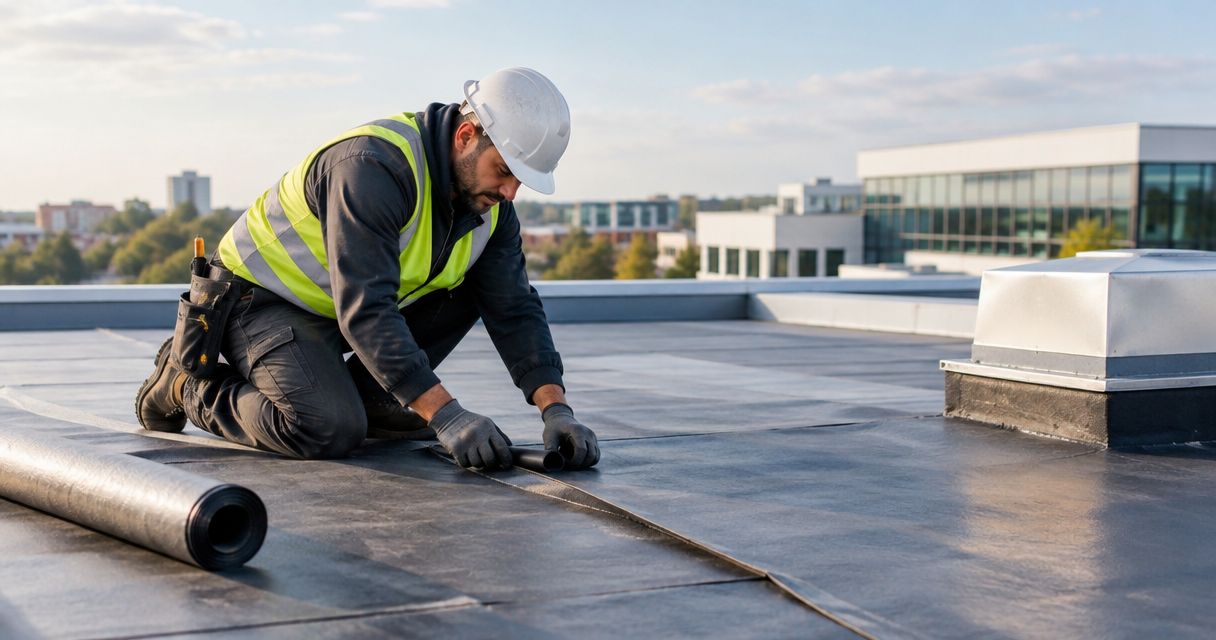
6. Low-slope membrane: best for porches and additions
A low-slope membrane forms a water-control surface with sealed seams rather than overlapping shingle courses. EPDM, TPO, and PVC are distinct membrane types, not interchangeable product names.
The right specification depends on the roof assembly, attachment method, drainage, and manufacturer requirements. A low-slope porch should not inherit the main roof’s material simply for visual consistency.
Low-slope membrane pros:
- Suits roof areas where shingles are inappropriate.
- Sealed seams address the slower drainage of low-slope roofs.
- Compatible flashing components serve penetrations and transitions.
Low-slope membrane cons:
- Punctures and damaged seams need prompt attention.
- Ponding water requires investigation rather than cosmetic patching.
- Transitions to walls and steeper roofs need careful detailing.
Best for: Low-slope porches, additions, and similar roof areas requiring a dedicated system.
Ask where water exits and what happens if that route becomes blocked. The drainage answer should be clear before work begins.
Verdict: Buy a properly specified membrane for a low-slope area, not shingles chosen to match.
Snow load and ice dams need different solutions
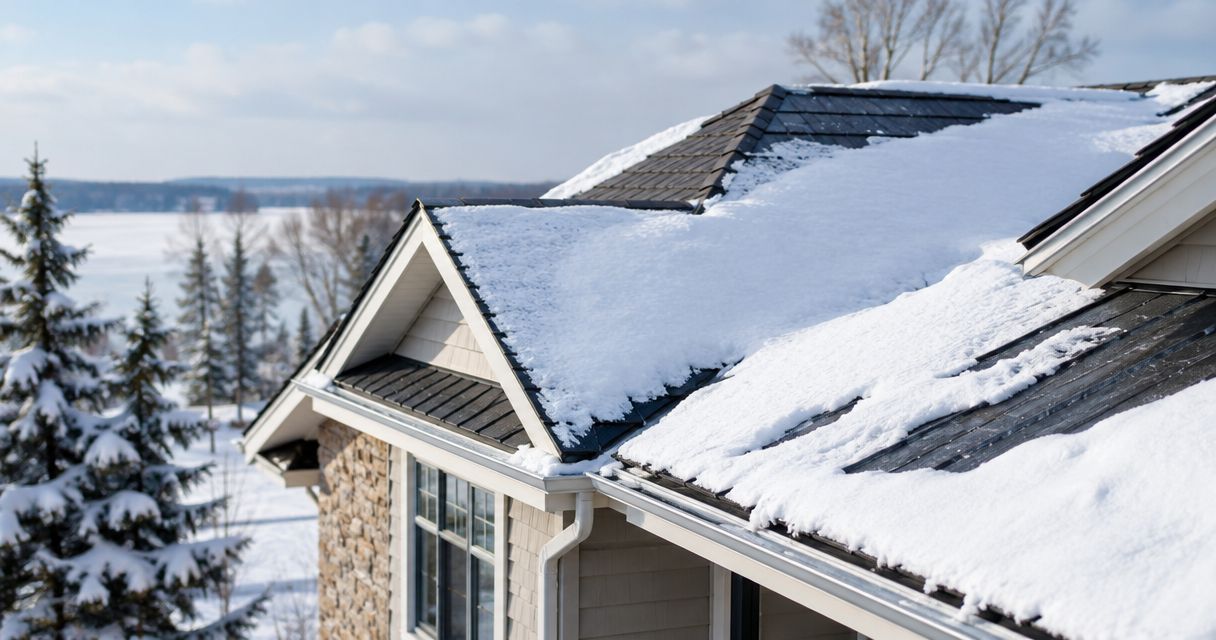
Snow load concerns the weight supported by the roof structure. Ice dams concern meltwater backing up behind ice, commonly where warmer roof areas drain toward colder eaves. Changing the covering alone does not solve either problem.
Comparing roofing materials for snow loads requires separating the covering’s own weight from the snow load the structure must support. Material guidance from another region does not establish the design requirements for an Eau Claire home.
Use these separate checks:
- Structure: Have concerns about sagging, altered framing, or a heavier replacement evaluated by a qualified professional.
- Heat flow: Address attic air leakage and insulation conditions that contribute to uneven roof temperatures.
- Water backup: Specify appropriate ice-barrier protection and flashing.
- Drainage: Keep discharge routes clear and account for gutters, valleys, and lower roofs.
Never climb onto an icy roof to investigate. Keep people away from falling snow or ice, and arrange professional assessment when you see deformation, active leakage, or unsafe accumulation.
Check slope before signing the roofing scope
Roof pitch describes vertical rise relative to horizontal run. A 2:12 pitch rises 2 inches over 12 inches of horizontal run; a 3:12 pitch rises 3 inches over 12 inches; a 4:12 pitch rises 4 inches over 12 inches.
Under commonly adopted residential roofing provisions, asphalt shingles are not used below 2:12. Slopes from 2:12 to below 4:12 require additional underlayment provisions. Confirm the locally applicable code and the selected manufacturer’s instructions for your project.
Your 2026 written scope should identify each roof area separately. Ask these questions:
- What is the measured pitch of the main roof, porch, and additions?
- Which existing layers will be removed?
- How will damaged decking be documented and addressed?
- Where will ice-barrier protection and new flashing go?
- How will roof work connect to siding, windows, doors, and gutters?
- Will sliding snow affect a deck, sunroom, entrance, or walkway?
Request product-warranty and workmanship-warranty terms separately. A manufacturer’s warranty concerns the product under its stated terms; workmanship coverage concerns installation under the contractor’s stated terms. Neither label tells you the exclusions without the actual documents.
How we ranked these materials
This ranking uses slope suitability, structural demands, water management, snow behavior, repair needs, and installation requirements. It is a use-case guide, not a claim of comparative field testing.
Architectural asphalt shingles take the default replacement slot because they fit conventional sloped-roof projects. Standing-seam metal takes the snow-shedding slot, while membrane roofing serves low slopes. The remaining materials answer specific appearance preferences with additional requirements.
Which roofing material should you choose?
Start with architectural asphalt shingles for a conventional sloped-roof replacement. Compare standing-seam metal when controlled snow shedding is a priority, and specify a dedicated membrane for low-slope areas.
Choose stone-coated steel, synthetic slate, or natural slate because you want their particular appearance—not because a category label promises protection from every winter problem. Have the structure, slope, and installation details settled first.
FAQ
What's the best roofing material for Wisconsin winters?
Architectural asphalt shingles are a practical default for conventional sloped-roof replacements. Standing-seam metal suits planned snow shedding, while a dedicated membrane suits low-slope areas.
Is a metal roof better than shingles for snow?
Smooth standing-seam metal sheds snow more readily than asphalt shingles. That benefit requires a snow-retention plan wherever sliding snow threatens entrances, walkways, or lower roofs.
Will a new roof stop ice dams?
A new roof covering alone does not stop ice dams. Attic air leakage, insulation, roof temperatures, drainage, and ice-barrier details also need attention.
Can I put asphalt shingles on a porch roof?
Asphalt shingles suit a porch roof only when its slope and assembly meet applicable code and manufacturer requirements. A low-slope porch often needs a dedicated membrane system instead.
Does natural slate handle Wisconsin snow loads?
Natural slate does not establish a roof structure's snow-load capacity. The framing must be evaluated for the complete roof assembly and applicable loads before slate is specified.
Does Liberty Exteriors install roofing in Eau Claire?
Liberty Exteriors provides roofing installation services in Eau Claire, the Chippewa Valley, and west central Wisconsin. Ask which roofing systems are available for your particular project.
What should a roofing quote include for winter protection?
A roofing quote should identify the covering, underlayment, ice-barrier protection, flashing, drainage details, and any snow-retention work. Product-warranty and workmanship-warranty terms should be provided separately.
One last thing
Ask the contractor to mark every place where one roof system meets something else: a wall, chimney, porch, gutter, or lower roof. Those intersections deserve as much discussion as the material itself. Before approving your 2026 project, make sure the written scope explains how each one will shed water.