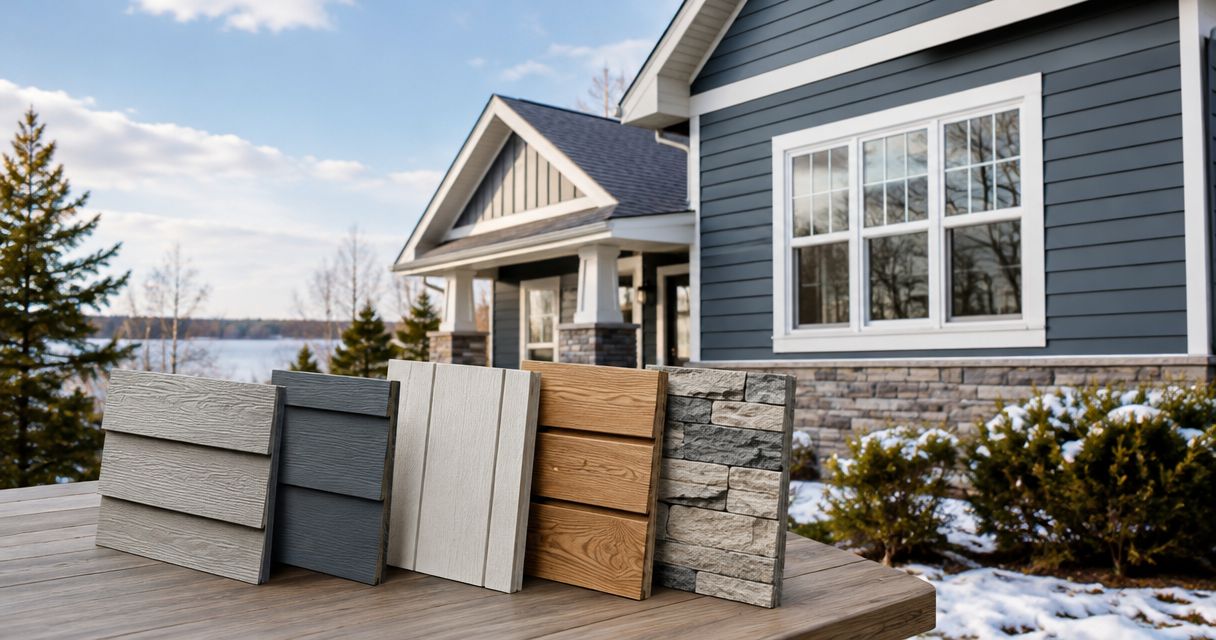
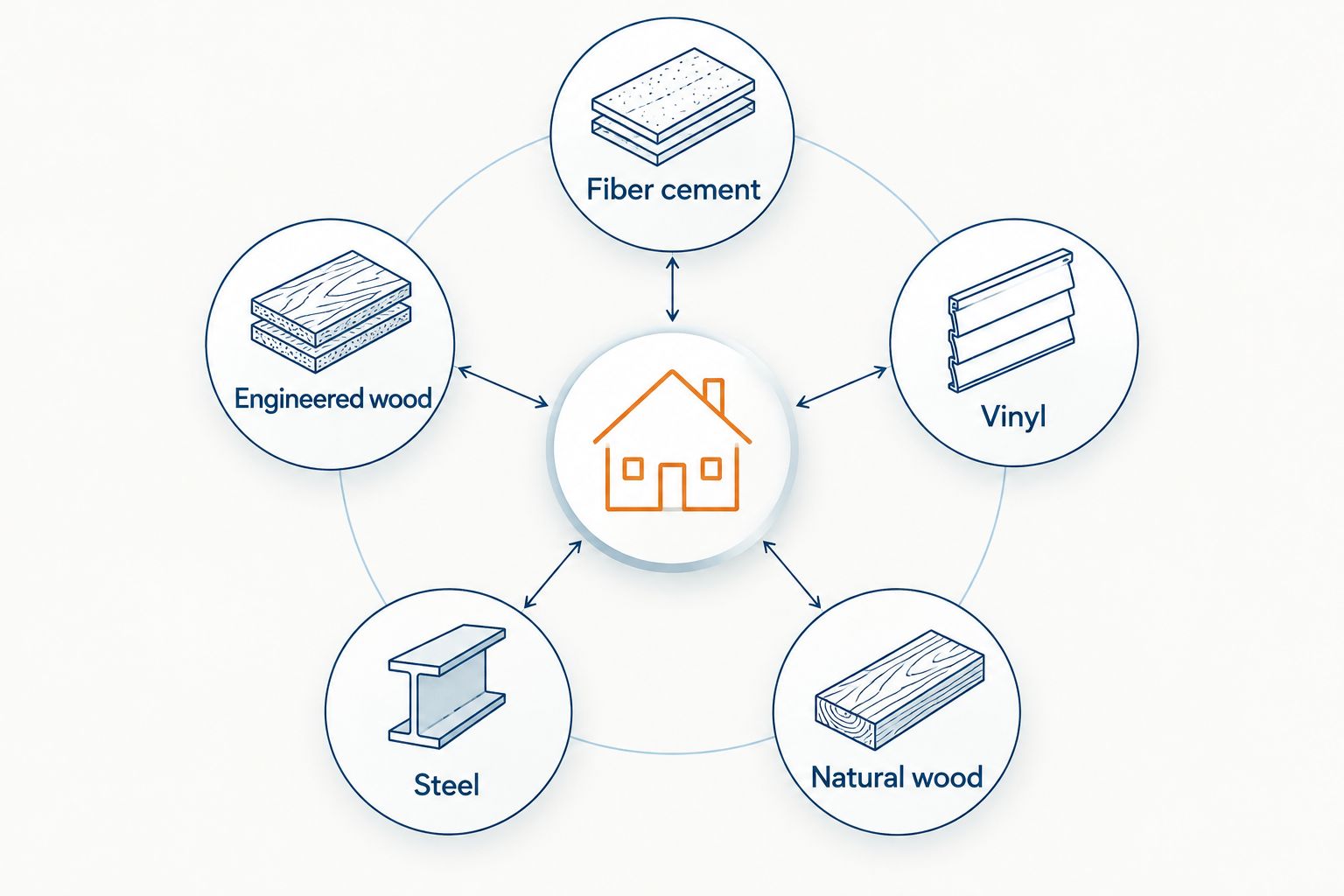
Best overall: fiber cement. Best for a wood-like appearance: engineered wood. Best for straightforward upkeep: vinyl. This 2026 guide compares the best siding materials for Wisconsin homes, including steel for a metal finish and natural wood for traditional character.
- Fiber cement leads this best siding materials for Wisconsin homes comparison for homeowners prioritizing appearance and fire resistance.
- Engineered wood suits homeowners seeking wood-like siding; vinyl suits those who want to avoid repainting.
- Steel suits a metal exterior; natural wood suits homeowners prepared for regular finish maintenance.
- Liberty Exteriors provides siding installation in the Chippewa Valley; compare material requirements and installation details before choosing.
Why this matters
Wisconsin siding needs more than an attractive surface. Rain, snow, temperature changes and moisture around windows all make installation details important. A material choice does not fix a poorly drained wall or a leaking opening.
Liberty Exteriors provides siding installation in Eau Claire and the surrounding Chippewa Valley, with local experience serving the area since 1984. For your 2026 project, start with the condition of the wall, then choose the appearance and maintenance commitment you want.
Liberty Exteriors is a siding installation option for Chippewa Valley homeowners planning an exterior replacement. Ask how the proposed work addresses existing damage, water management and connections to the rest of the exterior.
What makes the best siding materials for Wisconsin homes
Use these criteria to compare materials before comparing color samples:
- Water management: The siding, drainage layer and flashing must work together to direct water outside. Ask how windows, doors and roof intersections will be handled.
- Maintenance: Separate routine cleaning from repainting, staining and inspection. Choose a commitment you can sustain.
- Damage and repair: Consider cracking, denting, moisture damage and how individual pieces would be replaced.
- Appearance: Compare texture, profile, corners and trim—not just the face of a sample.
- Installation requirements: Fasteners, clearances and joints must follow the selected product's instructions. Requirements differ between products within the same material category.
- Warranty scope: Read material coverage separately from workmanship coverage. Neither should be assumed from the material name.
For 2026, use the same criteria across every proposal. Otherwise, you risk comparing a complete replacement scope with a narrower installation that leaves important details unresolved.
Wisconsin siding materials at a glance
This ranking assigns each material a different job. It is a homeowner decision guide, not a claim that every product within a category performs identically.
| Rank and material | Best for | Standout feature | Key limitation |
|---|---|---|---|
| 1. Fiber cement | Balanced appearance and fire resistance | Noncombustible siding material with painted finish options | Heavy material with demanding cutting and installation requirements |
| 2. Engineered wood | Wood-like appearance | Manufactured wood-based boards with textured surfaces | Cut edges, joints and moisture clearances need careful detailing |
| 3. Vinyl | Straightforward upkeep | Does not require routine repainting | Can crack under impact, particularly in cold conditions |
| 4. Steel | Metal finish | Noncombustible metal cladding | Can dent; damaged protective coatings need attention |
| 5. Natural wood | Traditional character | Genuine grain and options for painted or stained finishes | Requires ongoing finish maintenance and moisture checks |
A material's fire characteristics do not establish a fire rating for the entire wall. The backing, insulation, openings and complete wall assembly remain separate considerations.
1. Fiber cement: best siding for balanced priorities
Fiber cement combines cement-based material with reinforcing fibers. It provides a painted exterior in profiles that include lap siding, panels and shingle-style shapes, depending on the product selected.
Fiber cement is the default recommendation when you want a painted exterior and place a high priority on noncombustible cladding. It does not eliminate upkeep: the finish, joints and flashing still need inspection and maintenance.
Fiber cement pros:
- Offers a wood-like appearance without using solid wood boards.
- Provides a noncombustible siding material.
- Supports several architectural profiles and painted finishes.
Fiber cement cons:
- Its weight and cutting requirements make installation demanding.
- Painted finishes need maintenance over time.
- Incorrect clearances or fastening can undermine the installation.
Ask how the installer will manage cutting dust, support the boards and protect vulnerable transitions. Confirm which finish is included and who is responsible for any field painting.
Best for: Homeowners prioritizing a painted appearance and fire resistance over minimal installation complexity.
Verdict: Buy fiber cement when its appearance and maintenance requirements fit your home.
2. Engineered wood: best siding for a wood-like appearance
Engineered wood siding uses manufactured wood-based material rather than solid sawn boards. Product construction and protective treatments differ, so evaluate the exact product rather than treating the category as a single specification.
It belongs near the top of your list when you want wood-like texture and coordinated trim. Pay particular attention to where boards end, meet other materials or approach roofs and paving.
Engineered wood pros:
- Offers wood-like texture in manufactured boards and panels.
- Can create a coordinated siding-and-trim appearance.
- Is generally lighter to handle than fiber cement.
Engineered wood cons:
- Cut edges and joints require the specified treatment.
- Persistent moisture exposure can damage wood-based material.
- Finish maintenance remains part of ownership.
Ask the contractor to identify required clearances and explain how field-cut edges will be handled. A neat-looking joint is not enough; the detail must follow the selected manufacturer's instructions.
Best for: Homeowners who want wood-like texture and accept ongoing finish and moisture checks.
Verdict: Buy engineered wood when the proposed installation clearly addresses edges, joints and clearances.
3. Vinyl: best siding for straightforward upkeep
Vinyl siding is plastic cladding commonly used in horizontal and vertical profiles. Its appeal is practical: you can clean it without taking on a routine repainting schedule.
Vinyl needs room to move as temperatures change. Fastening and trim details must allow that movement rather than hold every panel tightly in place.
Vinyl pros:
- Does not require routine repainting.
- Does not rot like wood.
- Offers different profiles, textures and colors.
Vinyl cons:
- Impact can crack panels, especially in cold conditions.
- Excessive heat can distort the material.
- Replacement pieces do not always match weathered siding closely.
Ask how the installer allows for expansion and contraction. Also ask how damaged panels would be replaced around corners, fixtures and other obstructions.
Vinyl is a good fit when maintenance simplicity matters more to you than a painted-board appearance. Do not treat the word vinyl as proof of insulation performance; any insulation claim belongs to the specified product or wall assembly.
Best for: Homeowners who want to avoid repainting and accept the appearance and impact limitations.
Verdict: Buy vinyl for straightforward upkeep; skip it if a rigid, painted-board look is essential.
4. Steel: best siding for a metal finish
Steel siding provides metal cladding in profiles that vary by manufacturer. It suits homeowners who deliberately want that finish rather than a close substitute for painted wood.
Steel itself is noncombustible, but the coating and installation still require attention. Scratches, exposed edges and trapped moisture deserve inspection because steel can corrode when its protection is compromised.
Steel pros:
- Provides noncombustible metal cladding.
- Does not rot like wood.
- Offers a distinct metal appearance and formed profiles.
Steel cons:
- Hail or other impacts can leave dents.
- Damaged coatings and exposed steel need attention.
- Repairs must account for profile and finish matching.
Ask how cut edges, fasteners and dissimilar metals will be handled. Request the finish-care instructions rather than assuming that metal siding needs no maintenance.
Steel is not a promise of a dent-free exterior. If impact resistance drives your decision, request documentation for the exact product instead of relying on a category-wide claim.
Best for: Homeowners who want metal cladding and understand its denting and coating-maintenance trade-offs.
Verdict: Buy steel for its material character, not an assumption that it cannot be damaged.
5. Natural wood: best siding for traditional character
Natural wood siding uses real wood in forms such as boards, shingles or shakes. Species, grade, profile and finish all affect the appearance and care requirements.
Choose natural wood because you want genuine grain and accept responsibility for maintaining it. It is not the default recommendation for a homeowner trying to minimize exterior upkeep.
Natural wood pros:
- Provides genuine grain and natural variation.
- Supports painted or stained appearances.
- Allows individual boards or pieces to be repaired or replaced.
Natural wood cons:
- Requires ongoing inspection and finish maintenance.
- Sustained moisture can cause decay.
- Insects can damage susceptible wood.
Ask which species and grade the proposal includes, how exposed ends will be protected and what finish maintenance is required. The answer should describe the actual material, not simply promise a classic look.
Best for: Homeowners restoring traditional character who are prepared to maintain real wood.
Verdict: Buy natural wood for authenticity; skip it when low upkeep is your first priority.
How this siding ranking works
This 2026 ranking weighs water-management requirements, upkeep, repair considerations, appearance, installation complexity and warranty clarity. Fiber cement takes the default position for its combination of painted appearance and noncombustible material; the remaining choices serve different priorities.
The ranking does not assign laboratory scores or predict a service life. Product specifications, wall condition and workmanship can change the right choice for an individual home.
What to ask before requesting a siding quote
A useful siding proposal explains what happens behind the finished surface. Use these questions to keep the discussion concrete:
- Existing wall: Will the old siding be removed, and how will concealed damage be documented and addressed?
- Water control: What drainage layer and flashing details are included around openings and roof intersections?
- Exterior connections: How will siding meet roofing, replacement windows, doors, gutters, decks and sunrooms?
- Installation scope: Are trim, fixture blocks, penetrations, cleanup and disposal included?
- Warranty documents: Which terms cover the product, the finish and the contractor's workmanship?
For a 2026 project involving several exterior improvements, ask about sequencing before work begins. Window and door flashing, roof-to-wall connections, gutter attachments and deck connections all deserve attention before new siding conceals the wall.
Liberty Exteriors provides siding, roofing, windows, doors, gutters, decks and sunroom installation services. Discuss the connections relevant to your project without assuming that every exterior component needs replacement.
Product warranties and workmanship warranties are different. Request both in writing, and check exclusions, maintenance obligations and the process for reporting a problem.
Discuss your siding project
Review your home's siding priorities and connections to other exterior improvements.
Which siding material should you choose?
Choose fiber cement as your starting point if you want a painted exterior and noncombustible cladding. Move to engineered wood for wood-like texture, vinyl to avoid routine repainting, steel for a metal finish or natural wood for genuine grain.
Before approving a 2026 proposal, compare the exact material, wall preparation, trim, flashing and written warranty terms. A familiar material name does not make two installation scopes equivalent.
FAQ
What's the best siding material for Wisconsin homes?
Fiber cement is the default recommendation in this comparison for homeowners prioritizing a painted appearance and noncombustible cladding. Vinyl, engineered wood, steel and natural wood suit different appearance and maintenance priorities.
Is fiber cement better than vinyl siding in Wisconsin?
Fiber cement is the better fit for a painted-board appearance and noncombustible cladding; vinyl is the better fit for avoiding routine repainting. Fiber cement has demanding installation requirements, while vinyl needs room for thermal movement and can crack under impact.
Is engineered wood siding a good choice for the Chippewa Valley?
Engineered wood is a suitable choice when you want wood-like texture and accept finish maintenance. The installation must follow the selected product's requirements for cut edges, joints and moisture clearances.
Does steel siding resist all hail damage?
No, steel siding can dent under impact. Evaluate the exact product's documented performance rather than assuming all steel siding offers the same resistance.
Does new siding stop water leaks around windows?
New siding alone does not correct defective window flashing or a leaking wall assembly. The replacement scope needs to address the source of the leak and the drainage details around the opening.
Are siding product warranties and workmanship warranties the same?
No, product warranties and workmanship warranties cover different responsibilities. Ask for the written terms for the siding, its finish and the installation, including exclusions and maintenance requirements.
Should I replace windows and siding at the same time?
Coordinate the projects when both need work, but do not replace sound windows solely because you are replacing siding. Ask how the proposed sequence will preserve proper flashing and avoid disturbing completed work.
One last thing
Ask to see how water will leave the wall before choosing the final color. Siding is an outer covering, not a substitute for correctly installed flashing and drainage. That question tells you more about the proposed installation than a larger sample board.